1. How to think about Tokyo
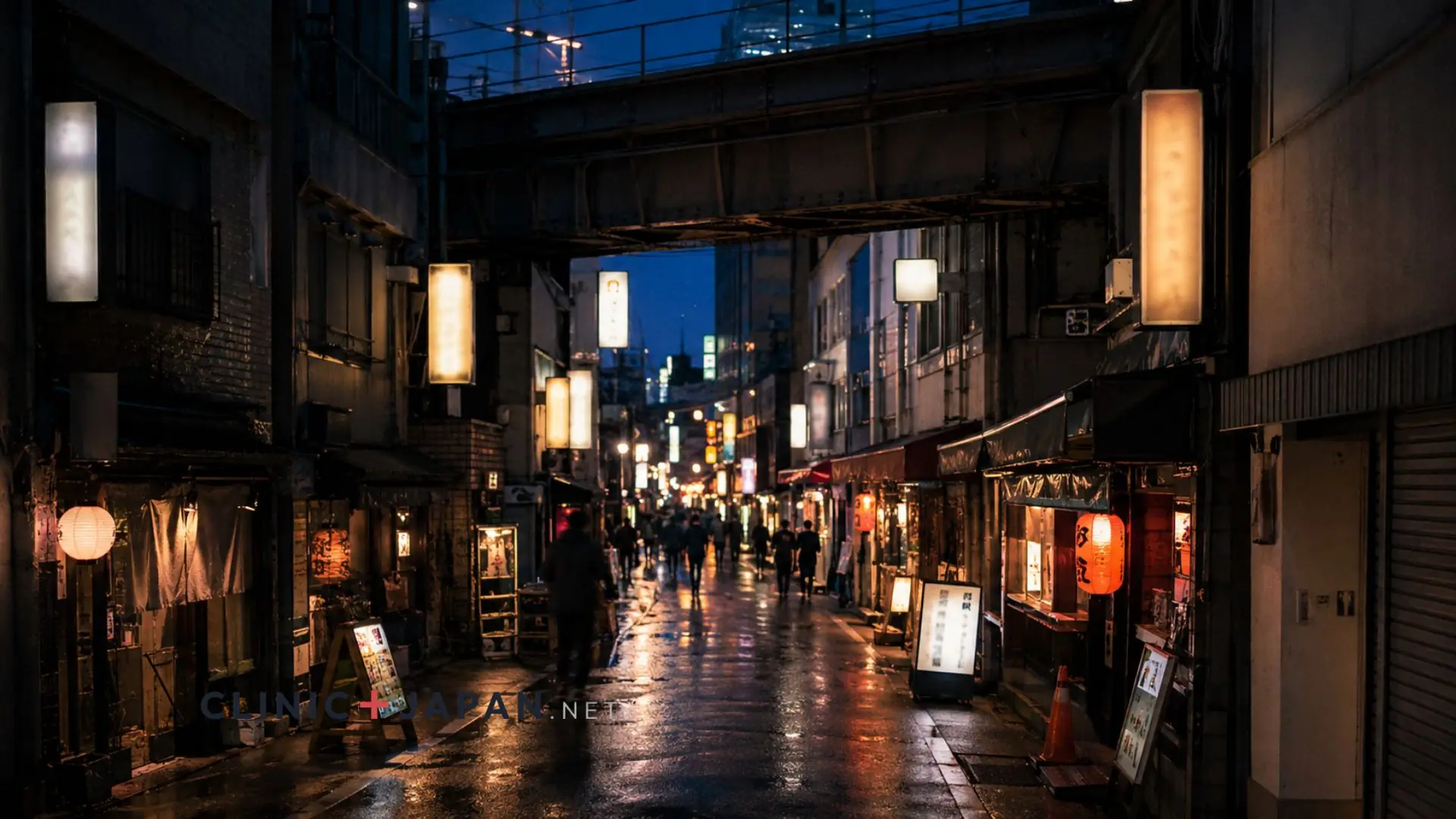
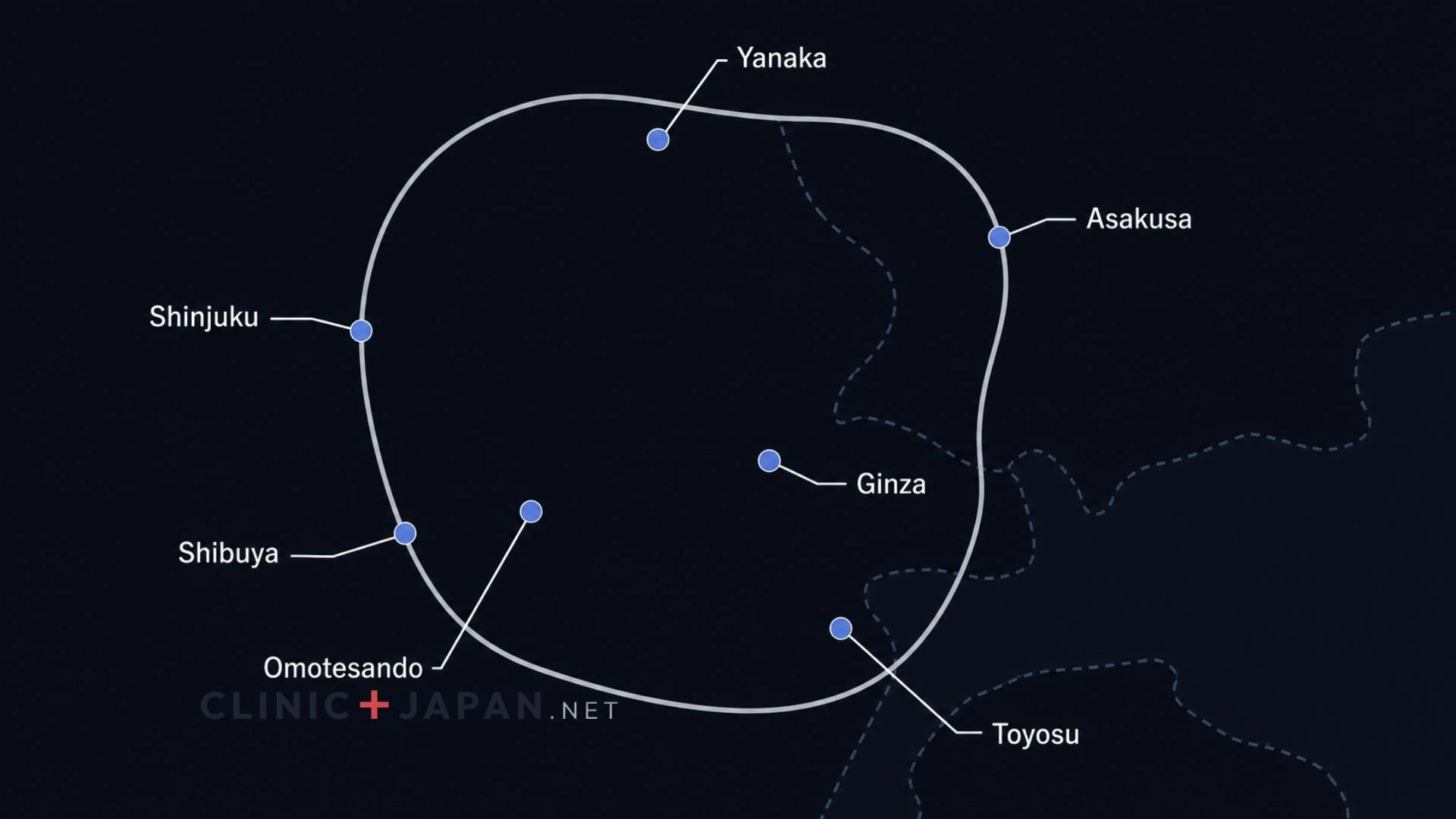
Tokyo is not a city with a centre and some suburbs. It is a chain of dense districts, each with its own character, strung along a loop line. The single biggest mistake first-time visitors make is building a list of attractions and then criss-crossing the city to tick them off. The city rewards the opposite approach: pick a district, spend half a day in it, move on.
| District | Character | Half-day worth |
|---|---|---|
| Asakusa | Old Tokyo, temple town | Senso-ji, Nakamise street food, riverside |
| Shibuya | Youth culture, density | The crossing, rooftop views, late-night eating |
| Shinjuku | Everything at once | Golden Gai, garden, department-store food halls |
| Omotesando / Aoyama | Design and quiet money | Architecture walk, boutique salons, cafes |
| Ginza | Old-money retail | Depachika basements, galleries, kabuki |
| Yanaka / Nezu | Low-rise, unhurried | Backstreet walking, small shrines, no crowds |
| Toyosu / Odaiba | Waterfront, modern | Market, digital art museums, bay views |
2. The essentials, and when to go to them
These are the things almost everyone does, which is fine — they are famous for reasons. Timing is what separates a good visit from a queue.
| Place | Why | When to go |
|---|---|---|
| Senso-ji, Asakusa | Tokyo's oldest temple | Before 8am or after 8pm — grounds stay open, crowds do not |
| Shibuya Crossing | The image of Tokyo | After dark, from a raised vantage point |
| Shinjuku Gyoen | The city's best garden | Weekday morning; closed Mondays outside peak seasons |
| teamLab digital art | Immersive installation | Advance ticket only — slots sell out days ahead |
| Tokyo Skytree | Height and orientation | An hour before sunset for day and night in one visit |
| Meiji Jingu | Forest shrine in the centre | Opening time — the approach is the point, not the shrine |
3. The unusual things people actually remember
Ask returning visitors what stayed with them and it is rarely the landmark list. It is the specific, slightly strange things Tokyo does better than anywhere.
| Experience | What it actually is |
|---|---|
| Depachika | Department-store food basements. Ginza and Shinjuku are the best. Free to walk, extraordinary to look at, and the cheapest way to eat well |
| A head spa | A 60–90 minute scalp treatment that Japan invented and still does best. Roughly the price of a good dinner |
| Kissaten | Old-style coffee houses, unchanged since the 1970s. Slow siphon coffee, no laptops, thick toast |
| Sento and onsen | Neighbourhood bathhouses, not tourist facilities. Cheap, local, and the fastest cure for a day of walking |
| Standing bars | Tachinomi under railway arches. No seats, no reservations, no English menu, excellent |
| Yanaka backstreets | The Tokyo that survived. Low-rise, cats, no crowds, twenty minutes from Ueno |
4. The beauty and wellness layer
This is where Tokyo differs from other big cities in a way most itineraries miss. Treatments and products that are premium purchases elsewhere are routine here, and the quality floor is high.
The shopping end is straightforward: drugstores in any district carry sunscreens, cleansers and lotions that cost a fraction of their export prices — our guides to Japanese skincare and drugstore makeup cover what is actually worth luggage space. The treatment end takes more planning: clinics and specialist salons work on reservations, often weeks out, and most do not operate walk-in.
| You have | Realistic option |
|---|---|
| One hour | Neighbourhood sento, or a dry head spa near a station |
| Half a day | Full wet head spa, or a facial at a salon |
| A day, booked ahead | Clinic consultation plus a same-day non-invasive treatment |
| A full trip built around it | Treatment with downtime, sequenced with buffer days — see our beauty weekend itinerary |
5. Eating, without overthinking it
Tokyo has more restaurants than any city on earth and the median quality is high enough that research has diminishing returns. Two structural things are worth knowing.
First, specialisation. Most good restaurants do one thing — tempura, or eel, or soba — and a place doing all three is doing none of them well. Second, price does not track quality the way it does elsewhere. A ¥1,200 lunch at a counter with six seats can be better than a ¥12,000 dinner, and the lunch sets at expensive restaurants are the single best value in the city.
6. Three days that work
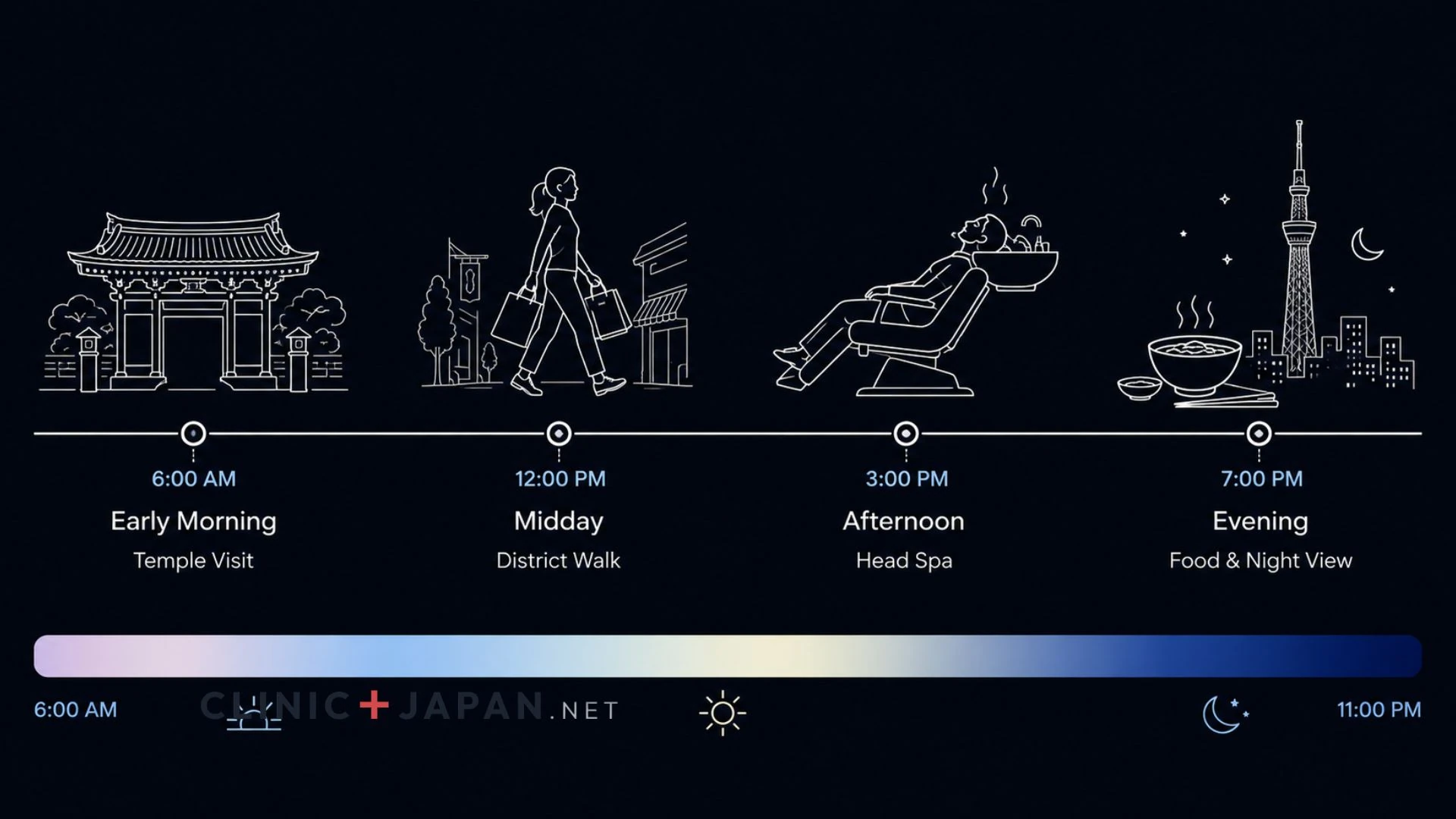
If you want a structure rather than a list, this sequence covers the range without backtracking.
| Day | Morning | Afternoon and evening |
|---|---|---|
| 1 | Asakusa early, then Yanaka backstreets | Ueno or Ginza depachika, evening in Shinjuku |
| 2 | Meiji Jingu at opening, Omotesando walk | Head spa or salon booking, Shibuya after dark |
| 3 | Toyosu or a digital art museum (pre-booked) | Skytree before sunset, standing bars under the arches |
Add a fourth day and the obvious move is out of the city — Kamakura, Hakone or Nikko are all under two hours. Add a week and Osaka is two and a half hours by shinkansen; our Osaka guide covers what changes when you get there. For budgeting the whole thing, see Japan trip costs.
7. FAQ
Sources & Method
Opening patterns, ticketing requirements and district characteristics below are taken from official tourism and venue sources, checked in August 2026. We deliberately do not publish admission prices or opening hours — they change often enough that a printed figure is a liability, and every venue publishes its own. Timing advice and the district-first planning approach are our own editorial position, not a sourced claim.
| Source | Used for |
|---|---|
| Go Tokyo — official Tokyo travel guide Tokyo Convention & Visitors Bureau · primary · accessed 7 Aug 2026 | District definitions, seasonal event calendar and venue status |
| Japan National Tourism Organization JNTO · primary · accessed 7 Aug 2026 | National-level travel practicalities and current visitor guidance |
| Source | Used for |
|---|---|
| Senso-ji Temple official site Kinryu-zan Senso-ji · primary · accessed 7 Aug 2026 | Grounds access outside main hall hours, which is what the early/late timing advice rests on |
| teamLab Planets TOKYO teamLab · primary · accessed 7 Aug 2026 | Advance timed-ticket requirement |
| TOKYO SKYTREE official site Tobu Tower Skytree · primary · accessed 7 Aug 2026 | Observation deck ticketing structure behind the sunset-timing advice |
| Source | Used for |
|---|---|
| District-first planning method, timing rules and the three-day shape ClinicJapan Research Team · Our own synthesis, not a cited source | Sections 1, 3, 5 and 6 in full. The two-districts-a-day rule, the depachika and head spa recommendations, and the eating notes are editorial judgement |
| No prices or hours by design Editorial note · Transparency item | We omit admission fees and opening hours throughout. Check each venue's own site before you go |
Related Guides
About this guide: This is an independent guide. We receive no commission from any venue, hotel, tour operator or clinic named or linked above, and nobody paid to be included. Venue operations change — confirm hours, closures and ticketing directly before travelling. Informational only; not medical advice.