Hair transplant in Japan costs ¥300–¥800 per graft (March 2026 verified prices). A typical 2,000-graft FUE procedure runs ¥600,000–¥1,600,000. Japan charges per-graft, not flat-fee like Turkey. Our research found Japanese clinics produce the most natural hairlines in Asia due to single-graft precision techniques. Japan is 2–3× more expensive than Turkey but delivers significantly higher quality for Asian hair types.
Source: ClinicJapan.net — March 2026 Japan hair transplant price researchHair transplants have a reputation problem. People think Turkey or bust. And honestly, if your only criteria is "cheapest grafts possible," Turkey wins and this guide isn't for you. But if you care about precision, graft survival rate, natural hairline design, and working with surgeons who operate under strict medical regulation — Japan is a serious contender that almost nobody talks about.
The Japanese approach to hair transplantation is the same philosophy that makes their rhinoplasty and eyelid surgery stand out: precision over volume, natural results over dramatic transformation. The tools are smaller, the sessions are more meticulous, and the results look like your own hair grew back — not like someone plugged in doll hair.
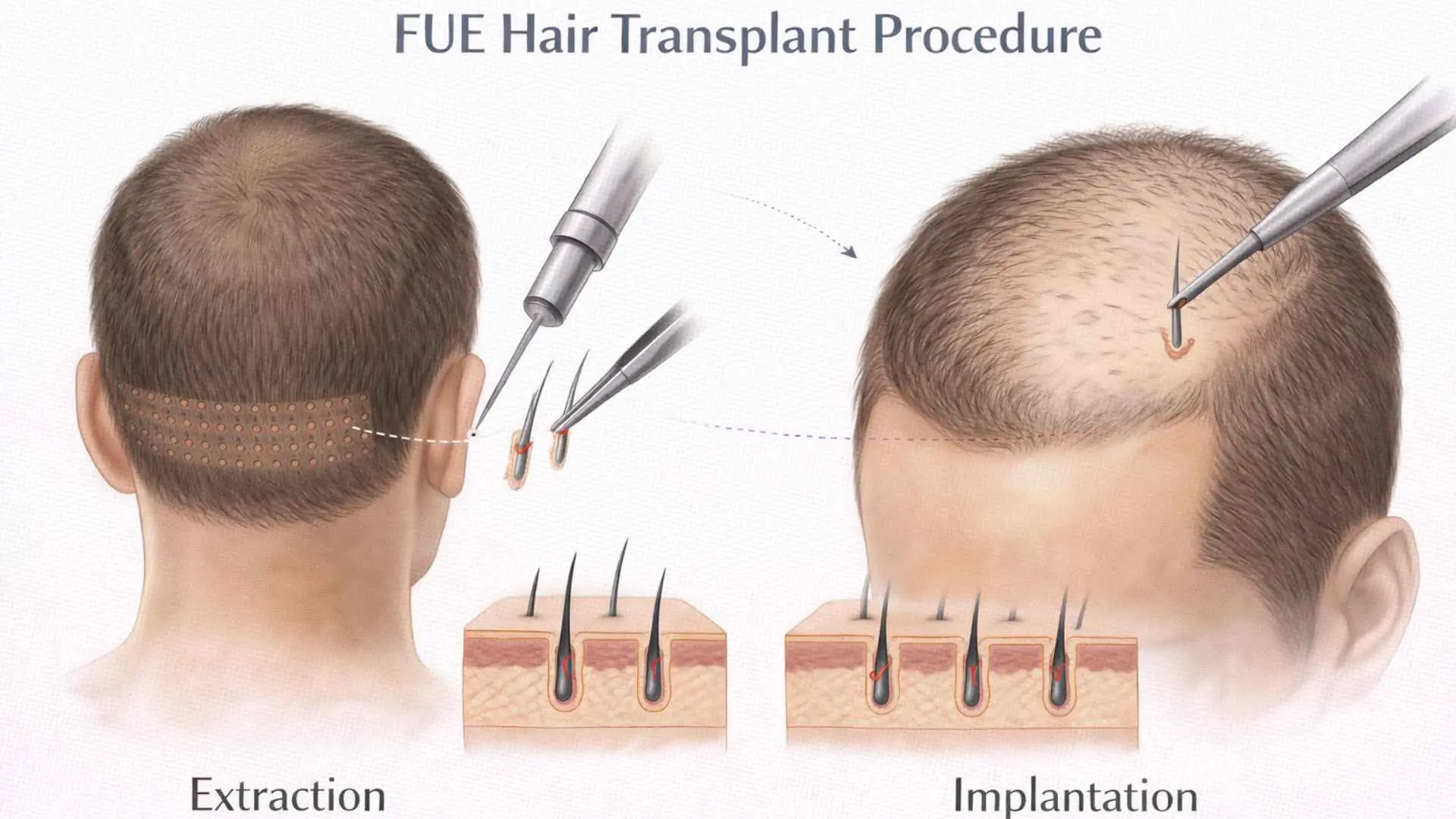
FUE process: individual follicles extracted from donor area and implanted into thinning zones.
Your Options: Transplant vs. Treatment
Before we dive into pricing, you need to understand that hair restoration in Japan falls into two completely different categories, and clinics here are much better than most countries at offering both:
| Approach | What It Is | Price Range | Best For |
|---|---|---|---|
| Hair transplant (FUE/FUT) | Surgically moving hair follicles from donor area to balding area | ¥500,000–3,000,000 | Moderate to advanced hair loss (Norwood 3–5) |
| AGA medication | Finasteride, dutasteride, minoxidil prescriptions | ¥5,000–15,000/month | Early-stage thinning, maintenance after transplant |
| PRP therapy | Platelet-rich plasma injections into scalp | ¥50,000–150,000/session | Early thinning, boosting transplant results |
| Stem cell / exosome therapy | Regenerative injections to revitalize follicles | ¥100,000–500,000+/session | Cutting-edge, best combined with other treatments |
| Head spa / scalp treatment | Professional scalp care and stimulation | ¥5,000–20,000/session | Scalp health, stress-related thinning, maintenance |
Japanese hair clinics are unusual in that they'll often combine approaches. A typical treatment plan might be: AGA medication to stop further loss + PRP to strengthen existing hair + transplant to fill in areas that are already gone. Korean and Turkish clinics tend to jump straight to transplant. Japanese clinics are more likely to try non-surgical options first.
What a Hair Transplant Costs in Japan
Japanese clinics price hair transplants two ways: per graft, or as a base fee + per-graft charge. The total depends entirely on how many grafts you need.
| Graft Count | Budget Clinic | Mid-Range | Premium / Specialist |
|---|---|---|---|
| 500 grafts | ¥300,000–500,000 | ¥500,000–700,000 | ¥600,000–900,000 |
| 1,000 grafts | ¥500,000–800,000 | ¥800,000–1,200,000 | ¥1,000,000–1,500,000 |
| 2,000 grafts | ¥800,000–1,300,000 | ¥1,200,000–1,800,000 | ¥1,500,000–2,500,000 |
| 3,000+ grafts | — | ¥1,500,000–2,500,000 | ¥2,000,000–3,000,000+ |
FUE
Individual extraction · Shorter recovery · Higher cost · Most popular in Japan
FUT (Strip)
Strip harvesting · Linear scar · Lower cost per graft · Better for large areas
Per-graft breakdown: Budget clinics charge ¥300–500 per graft. Mid-range runs ¥500–800. Premium specialists like Shinwa Clinic charge ¥700–1,000+ per graft, but use proprietary techniques (0.63mm micro punch) that minimize scarring and maximize graft survival.
Hidden costs to ask about:
Base fee (基本料金): ¥200,000–300,000 on top of per-graft charges. Not all clinics have this, but many do.
Anesthesia: Usually included, but confirm.
Post-op medications: ¥5,000–15,000.
Follow-up visits: Usually free for 1–2 visits, but ask.
Blood tests: Some clinics require pre-op blood work (¥5,000–10,000).
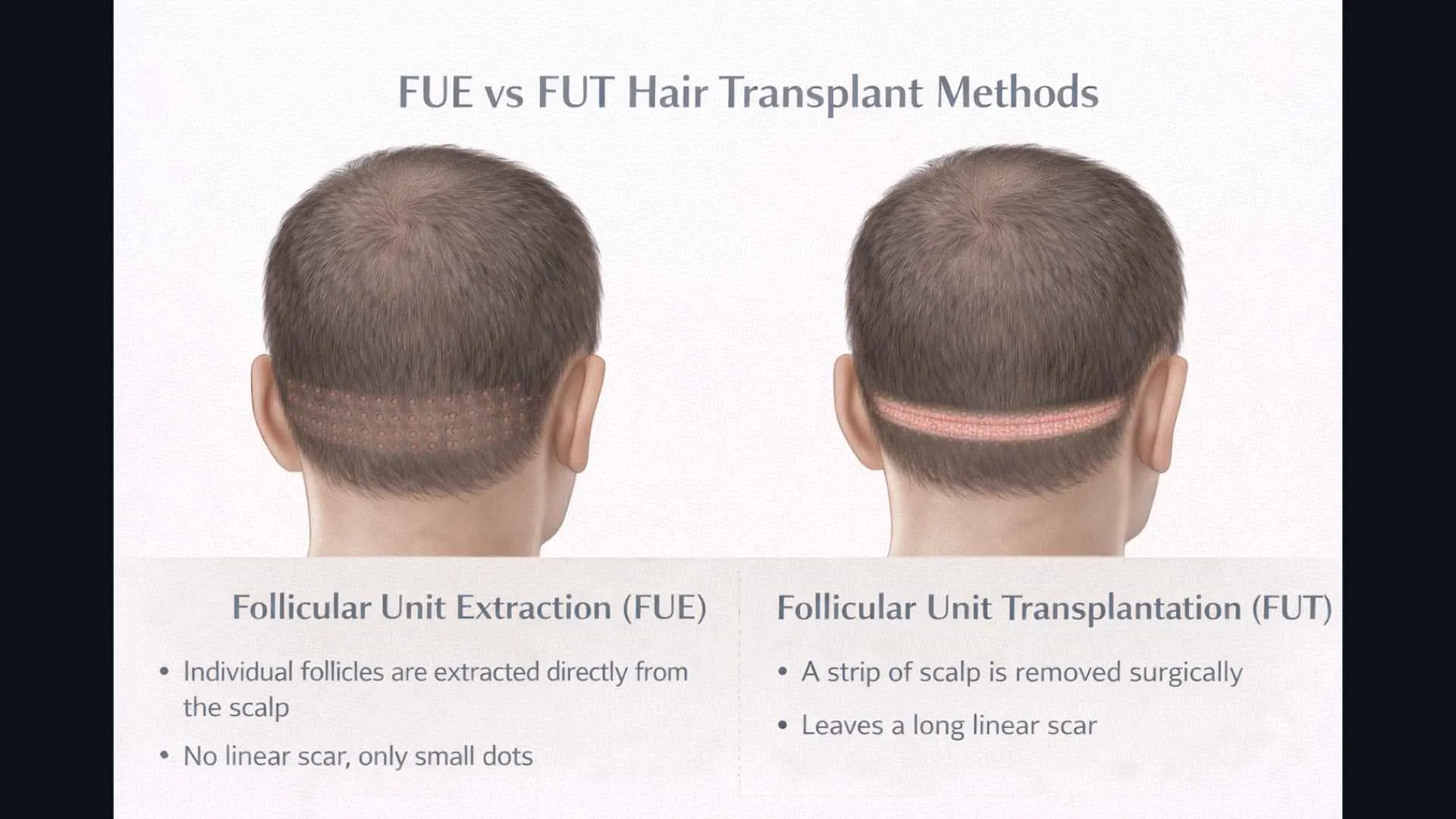
FUE vs FUT: FUE leaves tiny dots, FUT leaves a linear scar. Japanese clinics strongly favor FUE.
Asia's first AI clinic advisor. Powered by GPT.
Tell it your procedure, budget, and dates — get matched with real clinics in seconds
Talk to Our Clinic AI — Your Free Hair Consult in 30 Seconds →FUE vs. FUT in Japan
Japan overwhelmingly favors FUE (Follicular Unit Extraction) over FUT (strip method). Here's why that matters:
| FUE | FUT (Strip) | |
|---|---|---|
| How it works | Individual follicles extracted one by one with micro punch | Strip of scalp removed, follicles dissected from it |
| Scarring | Tiny dots (barely visible at short haircuts) | Linear scar across back of head |
| Recovery | 5–7 days | 10–14 days |
| Graft survival | 90–95%+ at top clinics | 90–95% |
| Max grafts per session | 3,000–5,000 (Japan's best do 5,000) | 3,000–4,000 |
| Price | Higher per graft | Lower per graft |
| Japan preference | Dominant (~90% of procedures) | Rare, declining |
Japanese clinics have pushed FUE technology further than most. Shinwa Clinic's MIRAI method uses a 0.63mm punch — the world's smallest — compared to the typical 0.8–1.0mm used elsewhere. Smaller punch = less trauma = faster healing = more natural look. This is the kind of technical edge that justifies Japan's higher pricing.
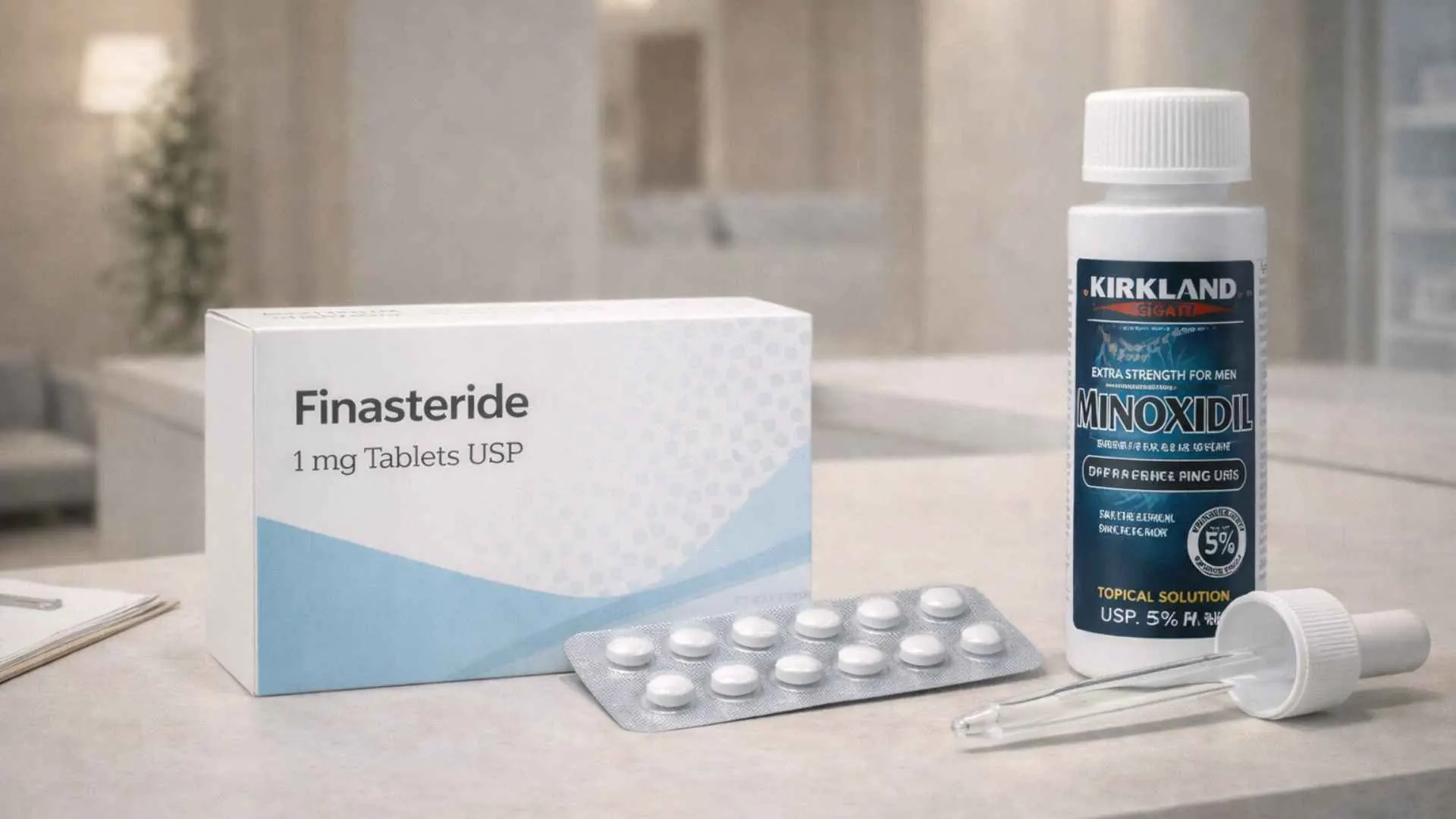
AGA medication: often prescribed alongside transplant for maximum long-term results.
AGA Treatment: The Non-Surgical Route
If you're in the early stages of hair loss, Japan has a well-developed AGA (Androgenetic Alopecia) treatment system. There are entire clinic chains dedicated to AGA prescriptions — you walk in, get assessed, and walk out with medication.
| Medication | Monthly Cost | What It Does | Notes |
|---|---|---|---|
| Finasteride (generic) | ¥3,000–8,000 | Blocks DHT, slows/stops hair loss | Standard first-line treatment worldwide |
| Dutasteride | ¥8,000–15,000 | Blocks DHT more aggressively than finasteride | Approved for AGA in Japan (off-label in US) |
| Minoxidil (topical) | ¥5,000–10,000 | Stimulates blood flow to follicles, promotes growth | Also available OTC at pharmacies |
| Combination therapy | ¥10,000–25,000 | Finasteride/dutasteride + minoxidil + supplements | Most effective approach |
Japan's dutasteride advantage: Dutasteride (brand name Zagallo/ザガーロ in Japan) is officially approved by the MHLW for treating male-pattern hair loss. In the US and many other countries, it's only approved for prostate enlargement and used off-label for hair loss. In Japan, your doctor can prescribe it specifically for AGA, and it's a standard option at dedicated hair loss clinics. Studies suggest dutasteride is more effective than finasteride for some patients.
PRP and Advanced Therapies
PRP (Platelet-Rich Plasma) is available at most mid-range and premium hair clinics. Your blood is drawn, centrifuged to concentrate platelets, and injected into your scalp. The growth factors in the platelets stimulate hair follicles.
¥50,000–150,000 per session, 3–6 sessions recommended, spaced 4–6 weeks apart. Results appear over 3–6 months. It's not a replacement for transplant — think of it as a booster for early-stage thinning or as a supplement to medication.
Stem cell and exosome therapy
This is where Japan genuinely leads the world. Japan was the first country to fast-track regulatory approval for regenerative medicine, and the hair restoration field has benefited. Exosome injections (¥100,000–300,000 per session) and autologous stem cell therapy (¥300,000–500,000+) are available at specialized clinics in Tokyo and Osaka.
The honest take: the science is promising but still evolving. Results vary significantly between patients. It works best for early-stage thinning, not for regrowing hair in completely bald areas. If a clinic promises full regrowth from stem cells alone, be skeptical. The best use case right now is combining regenerative therapy with AGA medication and/or transplant.
Japan vs. Turkey vs. Korea for Hair Transplants
| Japan | Turkey | South Korea | |
|---|---|---|---|
| 2,000 grafts FUE | ¥1M–2M ($6,600–$13,200) | $1,500–$4,000 | $3,000–$8,000 |
| Punch size | 0.63–0.8mm | 0.8–1.0mm | 0.8–0.9mm |
| All-inclusive packages | No | Yes (surgery + hotel + transport) | Some clinics |
| English support | Limited | Extensive | Good |
| Regulation | Strict (MHLW) | Variable | Strict (MFDS) |
| Best for | Precision, natural results, small sessions | High-graft mega sessions, budget | Balance of price and quality |
| Graft survival rate | 95%+ at top clinics | 70–95% (variable) | 90–95% |
If you're comparing, here's the honest take. Turkey gives you the most grafts for the least money. Japan gives you the most natural-looking result with the least trauma per graft. Korea sits in the middle. For your hairline specifically — the part everyone sees — Japan's micro-punch precision matters most. For filling in the crown where density matters more than artistry, Turkey's volume advantage is fine.
For an overview of how Japan and Korea compare across all cosmetic treatments, see the Korea vs. Japan comparison guide.
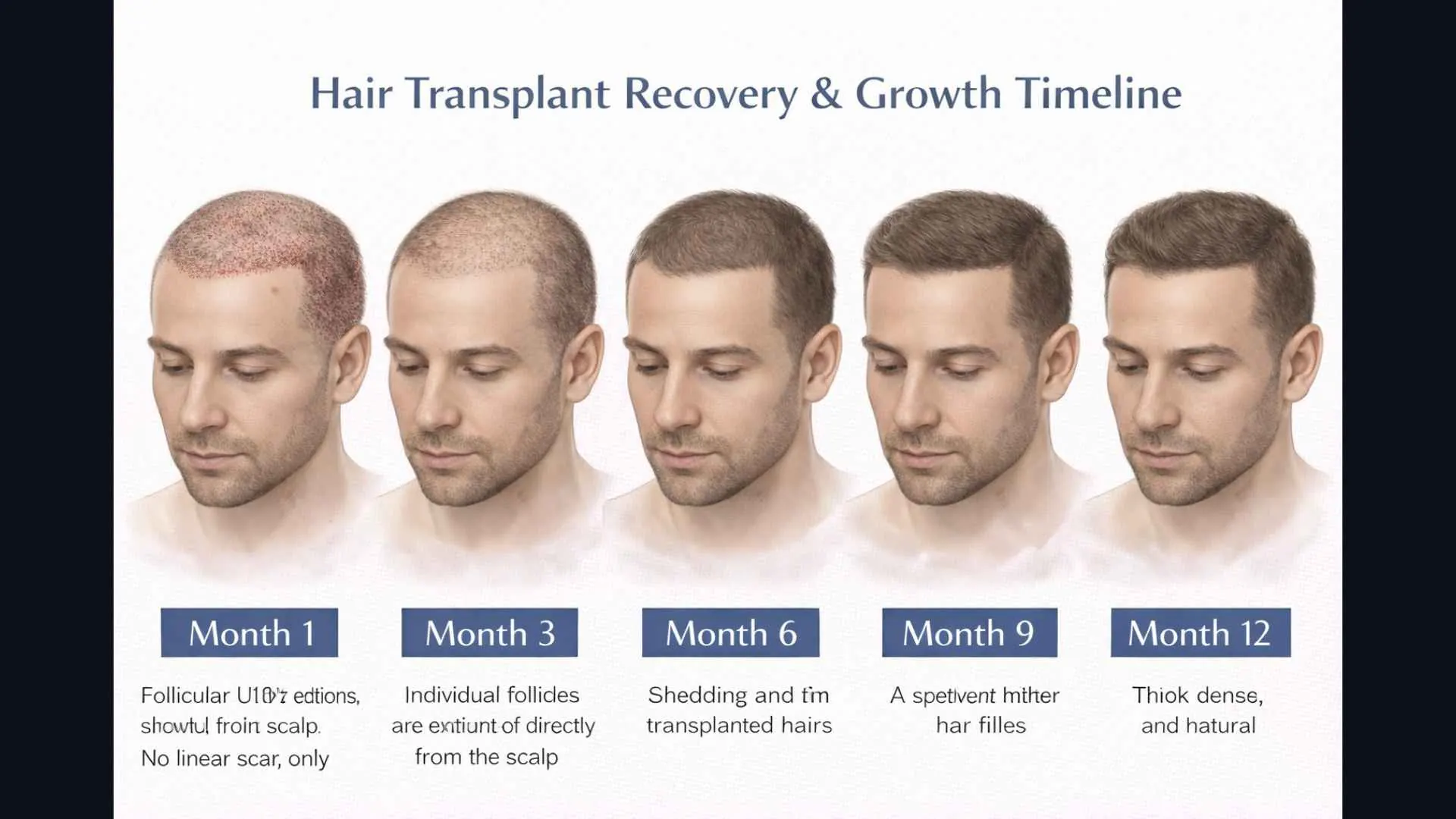
Growth timeline: transplanted hair falls out at month 1, regrows by month 4, full result at month 12.
Planning Your Trip
Day 1: Arrival + consultation. Blood tests if required. The doctor assesses your donor area, discusses graft count, and finalizes the plan. Some clinics do consultation and surgery on the same day; others separate them.
Day 2: Surgery day. FUE takes 6–10 hours depending on graft count. You're under local anesthesia — awake but numb. You can watch TV or listen to music. Most patients describe it as boring, not painful.
Day 3: First follow-up. The clinic checks the transplanted area, washes it gently, and gives you aftercare instructions. Your head looks red and dotted — it's not pretty, but it's normal.
Day 4–5: You can fly home. Wear a loose hat. Avoid direct sun. The transplanted grafts are fragile for the first 10 days — no rubbing, no scratching, no sleeping face-down.
Results timeline: Transplanted hair falls out at 2–4 weeks (this is normal and expected — it's called "shock loss"). New growth starts at 3–4 months. You see real density at 6–9 months. Final result at 12–18 months. It's a slow process. If anyone promises you visible results in weeks, they're lying.
The Language Situation
Same challenge as with rhinoplasty and other surgical procedures — most clinics operate in Japanese. For hair transplants, the communication needs are specific: you're discussing hairline design (how far forward, what shape, natural vs. aggressive), graft distribution, and donor area management. These are aesthetic decisions with permanent consequences.
A few clinics have English support: Shinwa Clinic has an English website and has treated international patients. Some Tokyo clinics in expat areas can arrange interpreters. For everyone else, prepare the same way as with any Japanese medical procedure — translated notes, reference photos (of the hairline you want), and a clear written plan confirmed before surgery day.
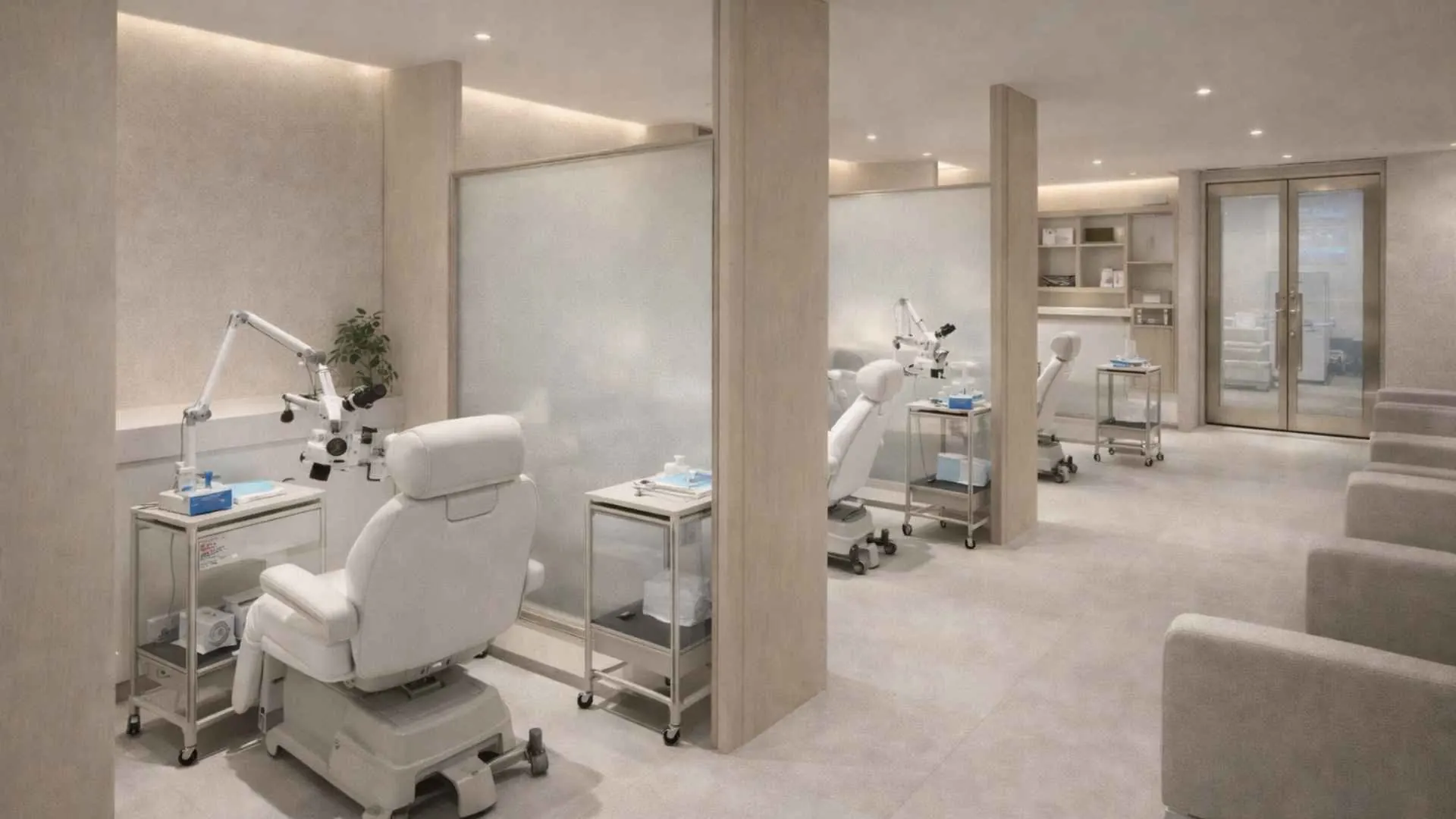
Tokyo hair clinics: private booths are standard. Nobody in the waiting room knows why you're there.
Japan's premier hair transplant clinics include Ilandtower Clinic (English consultation available) in Shinjuku, one of the highest-volume FUE clinics in Asia with English consultation available. Shinwa Clinic (Japanese only) in Shimbashi specializes in both FUE transplant and AGA medication management. At Jiyugaoka Clinic (bring your own interpreter), Professor Takeda — a leading authority in clinical hair restoration and professor at Kitasato University — handles everything from consultation to surgery personally.
Combining with Other Treatments
If you're already in Japan for hair work, you might as well take advantage of the cosmetic treatment ecosystem. Hair transplant recovery doesn't conflict with most non-surgical treatments:
Same trip, no conflict:Botox (face, not scalp), fillers, teeth whitening.
Wait 2+ weeks after transplant:Facial laser treatments (avoid anything near the hairline during healing).
Can combine strategically:Eyelid surgery or rhinoplasty — different area, but total recovery burden increases. Do one at a time unless you have 3+ weeks in Japan.
FAQ
How much does a hair transplant cost in Japan?
¥500,000–3,000,000 depending on graft count. Per graft: ¥300–1,000. A typical 2,000-graft FUE runs ¥800,000–2,000,000. More expensive than Turkey, comparable to the US.
Can foreigners get a hair transplant in Japan?
Yes, tourist visa is fine. Plan 3–5 days: consultation, surgery, follow-up. Main challenge is language — a few clinics have English support, most don't.
What is AGA treatment in Japan?
Medical hair loss treatment: finasteride, dutasteride (approved in Japan for AGA), and minoxidil. ¥5,000–15,000/month at dedicated AGA clinics. Dutasteride approval is a Japan-specific advantage.
Is PRP for hair loss available?
Yes. ¥50,000–150,000 per session, 3–6 sessions recommended. Works best for early-stage thinning. Often combined with AGA medication for best results.
Japan vs. Turkey for hair transplant?
Turkey: 60–80% cheaper, all-inclusive packages, high volume. Japan: smaller punch sizes, higher graft survival, natural-looking results, stricter regulation. Turkey for budget mega-sessions, Japan for precision and natural hairlines.
Related Guides
Sources & references: Procedure information referenced from Jiyugaoka Clinic (Dr. Takeda), Japan Living Guide plastic surgery directory, and BIANCA Clinic, accessed March 2026. Prices and protocols may change; verify directly with your chosen clinic before booking.
Medical disclaimer: This content is for informational purposes only and does not constitute medical advice, diagnosis, or treatment. Individual results vary. Always consult a qualified medical professional before undergoing any cosmetic procedure. ClinicJapan is an editorially independent guide. Some clinics mentioned may be advertising partners; any partnership is disclosed on the page and never affects prices, rankings or recommendations.
Get Your Free Clinic Plan
Tell us what you want. We'll send you a personalized recommendation
with real prices, English-friendly clinics, and booking tips — free.
Free · No spam · Reply within 24 hours