
Liposuction in Japan costs ¥150,000–¥1,600,000 per area (March 2026 verified prices). Vaser liposuction runs ¥300,000–¥800,000 per area. Traditional tumescent liposuction costs ¥150,000–¥500,000. Full-body sculpting packages range from ¥1,000,000–¥3,000,000+. Our research found Japanese clinics take a conservative approach — smaller volume removal per session for safety. Recovery takes 1–3 weeks with compression garments.
Source: ClinicJapan.net — March 2026 Japan liposuction price researchHere's something nobody tells you about liposuction in Japan: the price you see online is almost never the price you'll pay. A clinic lists "abdominal liposuction from ¥200,000" and you think that's your total. Then you get to the consultation and learn there's a separate fee for anesthesia, another for the compression garment, another for the facility, and the "from" price only covers a palm-sized area. Your actual bill is three times what you expected.
I'm not saying Japanese clinics are dishonest — this is how the entire industry works here. But it catches foreigners off guard every single time, and nobody seems to write about it in English. So let's fix that.
If you're considering body contouring in Japan alongside other procedures, the complete plastic surgery guide gives you the big picture. For non-surgical fat reduction alternatives, skin treatments covers some options. This guide focuses specifically on surgical liposuction.
What Liposuction Actually Costs in Japan
Let me give you the real numbers. Not the "from" prices. The all-in prices that people actually pay after consultation, anesthesia, and follow-up are factored in.
| Body Area | Traditional | VASER | US Comparison |
|---|---|---|---|
| Under chin / jawline | ¥150,000–400,000 | ¥250,000–500,000 | $2,500–$5,000 |
| Upper arms (both) | ¥200,000–500,000 | ¥400,000–850,000 | $3,000–$6,000 |
| Abdomen | ¥300,000–800,000 | ¥700,000–1,300,000 | $4,000–$8,000 |
| Back / bra line | ¥250,000–600,000 | ¥500,000–900,000 | $3,000–$7,000 |
| Thighs (both, inner+outer) | ¥400,000–800,000 | ¥800,000–1,600,000 | $5,000–$10,000 |
| Calves / ankles | ¥300,000–600,000 | ¥500,000–800,000 | $3,000–$6,000 |
| Full body (3+ areas) | ¥1,000,000–2,000,000 | ¥1,500,000–3,000,000 | $10,000–$20,000 |
Hidden fees to ask about:
麻酔代 (masui-dai) = anesthesia fee. ¥30,000–100,000 depending on type.
圧迫着衣 (appaku chakui) = compression garment. ¥10,000–30,000. Some clinics include it, most don't.
施設使用料 (shisetsu shiyou-ryou) = facility fee. ¥20,000–50,000.
術後検診 (jutsugo kenshin) = post-op checkup. Usually free, but confirm.
Always ask: "合計でいくらですか?" (goukai de ikura desu ka?) = "How much is the total?"
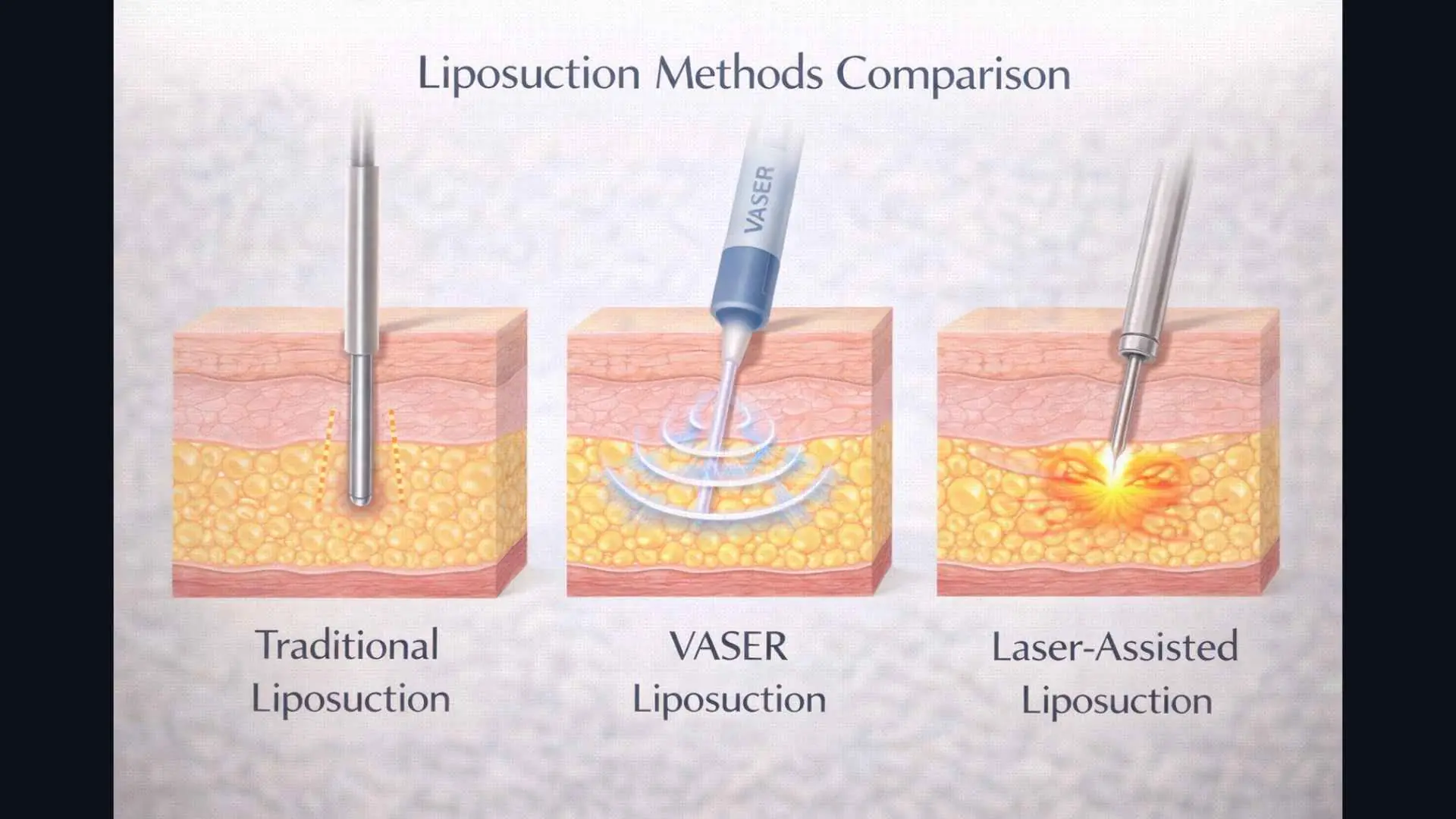
VASER vs traditional vs laser: each method has different precision levels and recovery profiles.
VASER vs Traditional vs Laser
Japanese clinics offer three main liposuction techniques. The one you get depends on your budget, the area being treated, and how much precision you want.
| Method | How It Works | Best For | Price Premium |
|---|---|---|---|
| Traditional (suction) | Cannula inserted, fat physically suctioned out | Large volume removal, budget-conscious | Base price |
| VASER | Ultrasound liquefies fat first, then suction | Precision contouring, smaller areas, less bruising | +20–40% |
| Laser (1444nm) | Laser energy targets fat cells for easier removal | Smaller areas, less invasive | +10–25% |
Traditional
More volume removed · More bruising · Faster surgery · Lower cost
VASER
Precision contouring · Less bruising · Gentler · 20–40% premium
Which one should you get? For large-volume removal (abdomen, thighs), traditional works fine and saves money. For sculpting (jawline, arms, back), VASER gives the surgeon more control. Japanese surgeons tend to recommend VASER for most areas because it produces smoother results — but they'll also acknowledge that for pure volume reduction, traditional is equally effective.
One surgeon I spoke with put it this way: "VASER is like painting with a fine brush. Traditional is like painting with a roller. Both cover the wall, but one gives you more detail." The question is whether you're paying for detail you'll actually notice.
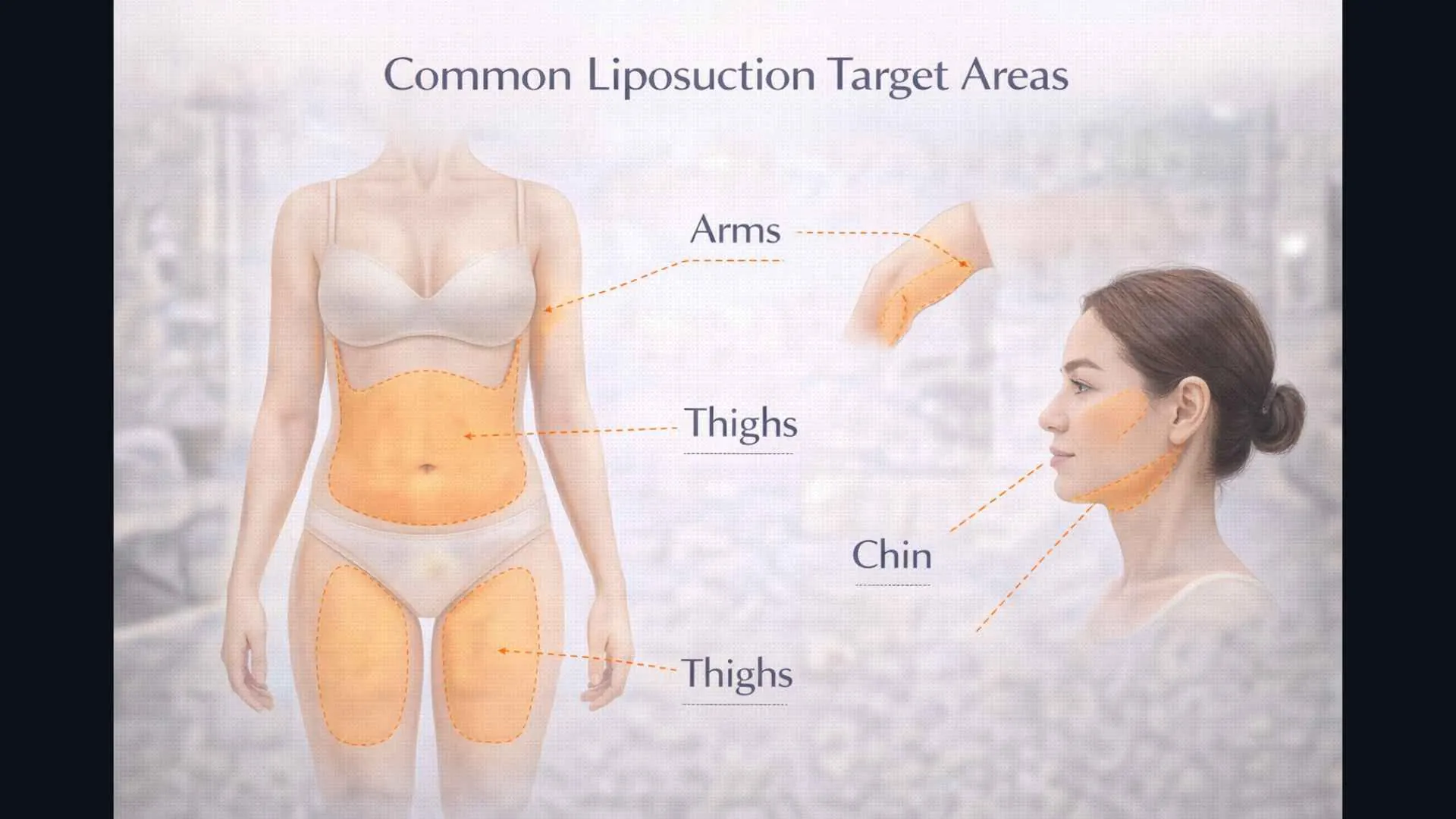
Common target areas: abdomen and thighs are #1 and #2 in Japan. Chin lipo is rising fast.
Asia's first AI clinic advisor. Powered by GPT.
Tell it your procedure, budget, and dates — get matched with real clinics in seconds
Talk to Our Clinic AI — Your Free Lipo Consult in 30 Seconds →The Monitor Discount: 15–50% Off (With a Catch)
This is something unique to Japan that foreigners almost never hear about. Many clinics run a モニター制度 (monitor system) where you get a significant discount in exchange for allowing your before/after photos to be used for marketing.
The savings are real: 15–50% off the listed price. For a ¥1,000,000 abdominal VASER, that's ¥150,000–500,000 in savings. For body liposuction, your face won't appear in the photos — only the treated area. So privacy risk is low.
The catch for foreigners: Monitor patients are required to return for follow-up photos at regular intervals — typically 1 week, 1 month, 3 months, and 6 months after surgery. If you can't return to Japan for these visits, most clinics won't offer the monitor price. If you live in Japan or visit regularly, this is a genuinely great deal. For one-time medical tourists, it's usually not available.
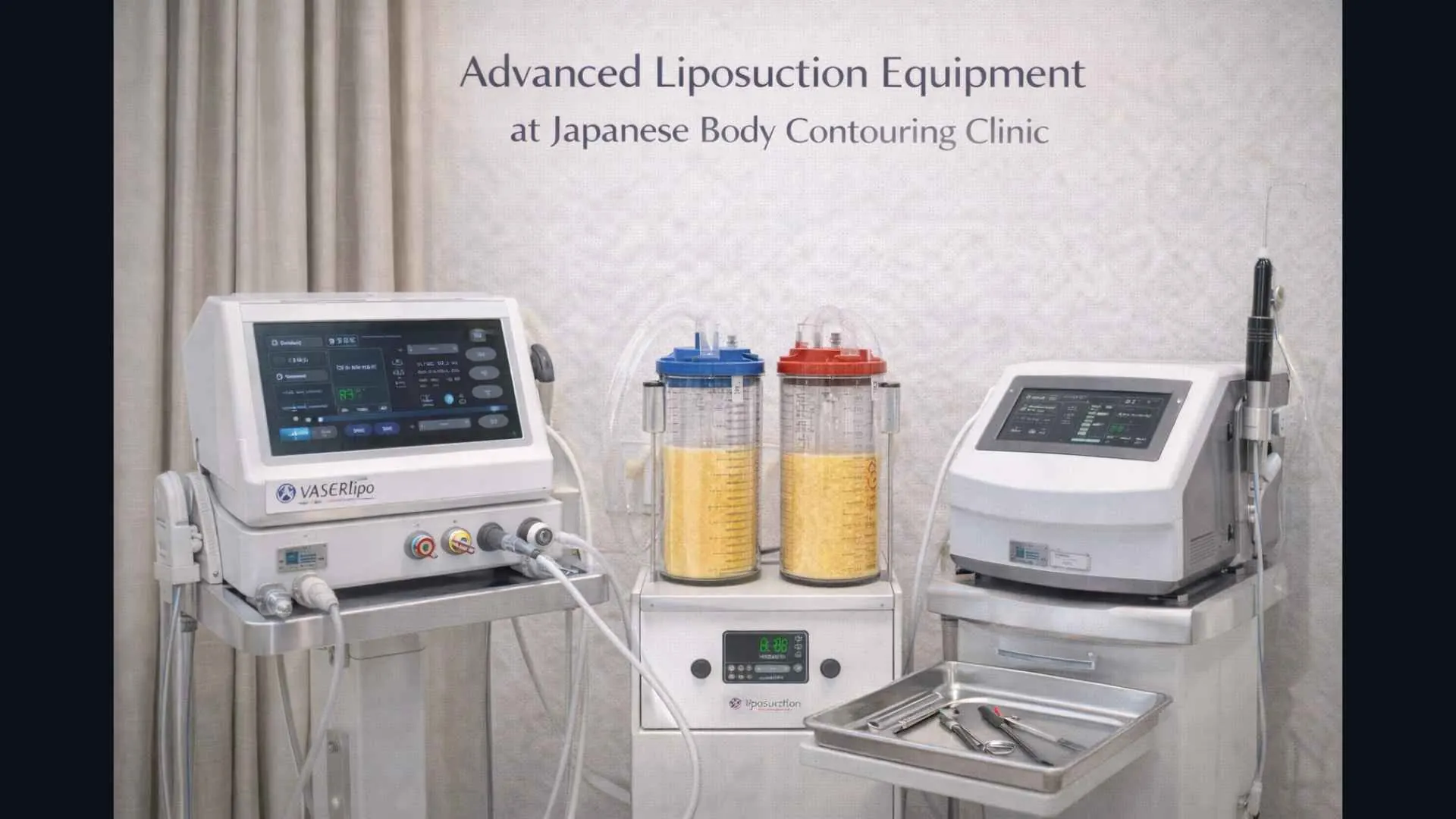
Japanese clinics invest heavily in equipment. VASER and waterjet machines are increasingly standard.
English-Speaking Liposuction Clinics
For a procedure that involves general anesthesia and detailed body contouring, you absolutely need clear communication with your surgeon. Here's where to look:
Shonan Beauty Clinic (SBC) — Largest chain in Japan. Dr. Kuzushima at the Ginza branch is known for liposuction (13,000+ cases). English-speaking staff available at select branches. VASER and traditional. Competitive pricing with monitor options.
Plaza Clinic (Hiroo) — US board-certified surgeon. Fully English-speaking. Premium pricing but zero language risk. Best for foreigners who want no surprises.
Akai Medical Clinic (Omotesando) — Bilingual doctors. Uses 2–3mm slim cannulas for less scarring. Laser liposuction available. Evidence-based approach.
Azabu Skin Clinic — English-speaking staff. Specializes in combination procedures (lipo + skin tightening). Good for medical tourists.
TCB (Tokyo Central Beauty) — Budget-friendly chain. English support at major branches. Good for chin/facial liposuction. Less suited for large-volume body work.
For Botox or fillers, language barriers are manageable. For liposuction, they're a real risk. The surgeon needs to understand exactly which areas you want treated, how much volume to remove, and what shape you're going for. A misunderstanding here isn't a minor inconvenience — it's a body contour you'll live with permanently. Bring reference photos, mark the areas on your body with a pen during consultation, and confirm the plan in writing.
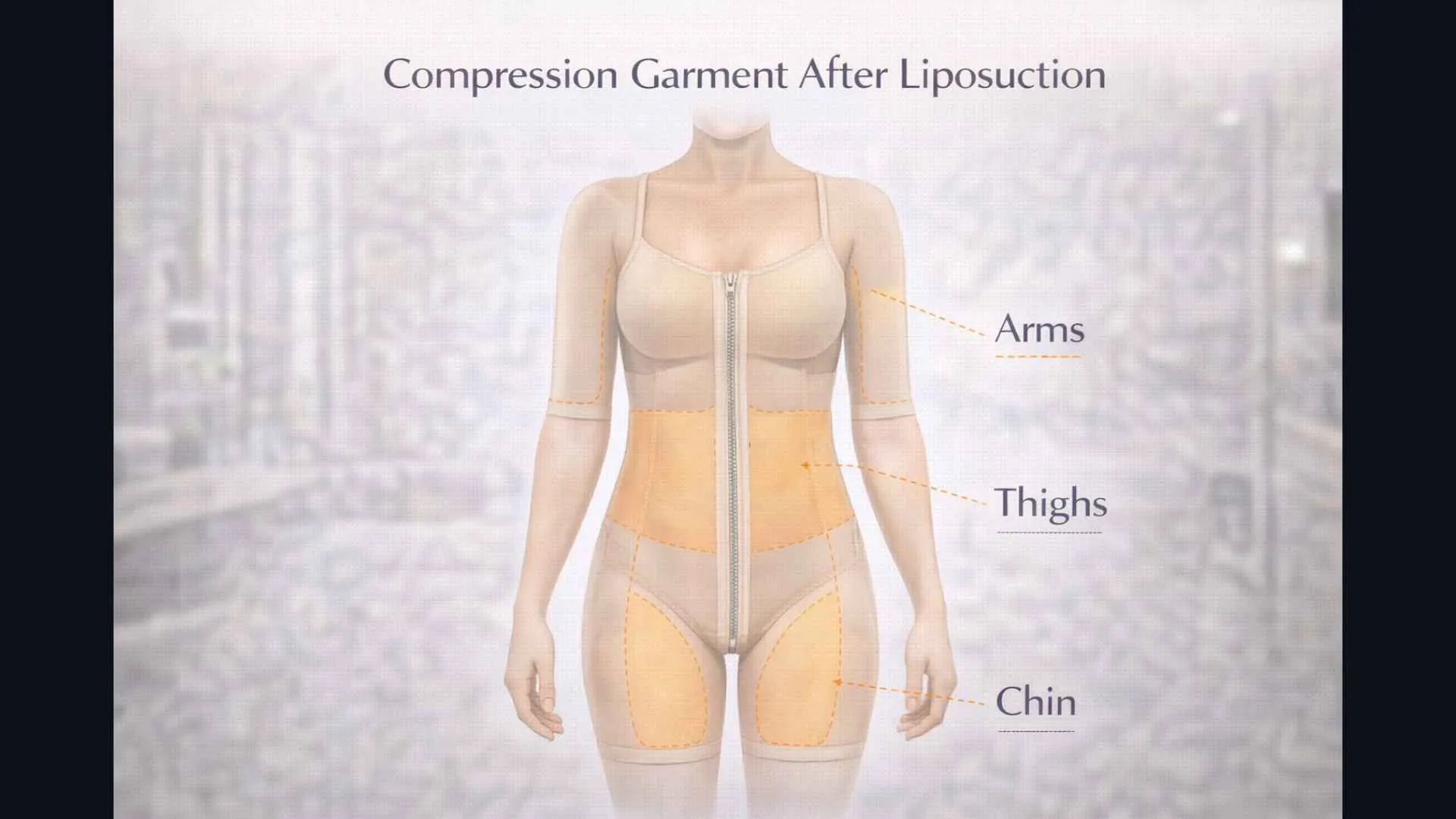
Compression garment: worn 24/7 for 2–4 weeks post-procedure. Non-negotiable for good results.
Recovery: What Actually Happens
The first 48 hours are the worst. Expect soreness like you did an extreme workout, plus swelling and bruising. You can walk the same day — and should, to prevent blood clots — but you won't want to sightsee.
Compression garments are non-negotiable. You'll wear one 24/7 for the first 1–2 weeks, then during the day only for another 2 weeks. Buy one from your clinic (they'll fit it to you) rather than bringing your own. Japanese clinics are particular about compression quality.
Planning your recovery in Japan: Book a hotel with a bathtub — you'll want it. Stay near your clinic for the first week in case of follow-up needs. Don't plan activities for the first 5 days. After day 7, light walking and shopping is fine. Dental work doesn't conflict with body lipo recovery, so some patients combine treatments. Botox and fillers can be done once swelling settles (usually week 2+).
Combining Liposuction with Other Procedures
This is where Japan gets interesting for medical tourists. Since you're already taking the trip and recovery time, combining procedures can be cost-effective. But not everything can be done at once.
| Combination | Compatible? | Notes |
|---|---|---|
| Lipo + thread lift | Yes (common) | Facial lipo + threads in same session. SBC's most popular combo. |
| Lipo + breast augmentation | Yes | Fat transfer uses liposuctioned fat for breast enhancement. |
| Lipo + rhinoplasty | Separate sessions | Different anesthesia zones. Usually 2+ weeks apart. |
| Lipo + eyelid surgery | Separate sessions | Can be done same trip, 1 week apart. |
| Lipo + laser treatment | After healing | Skin tightening lasers work best 2–3 months post-lipo. |
| Lipo + dental | Yes | No conflict. Can do dental during lipo recovery week. |
Japan vs Korea for Liposuction
| Japan | South Korea | |
|---|---|---|
| Price (abdomen) | ¥300K–1.3M | $1,500–$5,000 |
| VASER availability | Widespread | Widespread |
| English support | Limited | Extensive |
| Surgeon approach | Conservative, precise | Aggressive, dramatic |
| Fat transfer combo | Available | Very common (BBL popular) |
| Post-op support | Clinic-dependent | Medical tourism packages |
Korea is cheaper and easier for foreigners. Japan is more conservative — surgeons here tend to remove less fat and prioritize smooth contours over maximum volume reduction. If you want subtle body refinement, Japan. If you want dramatic slimming, Korea might serve you better. For the full comparison across all procedures, see Korea vs Japan.
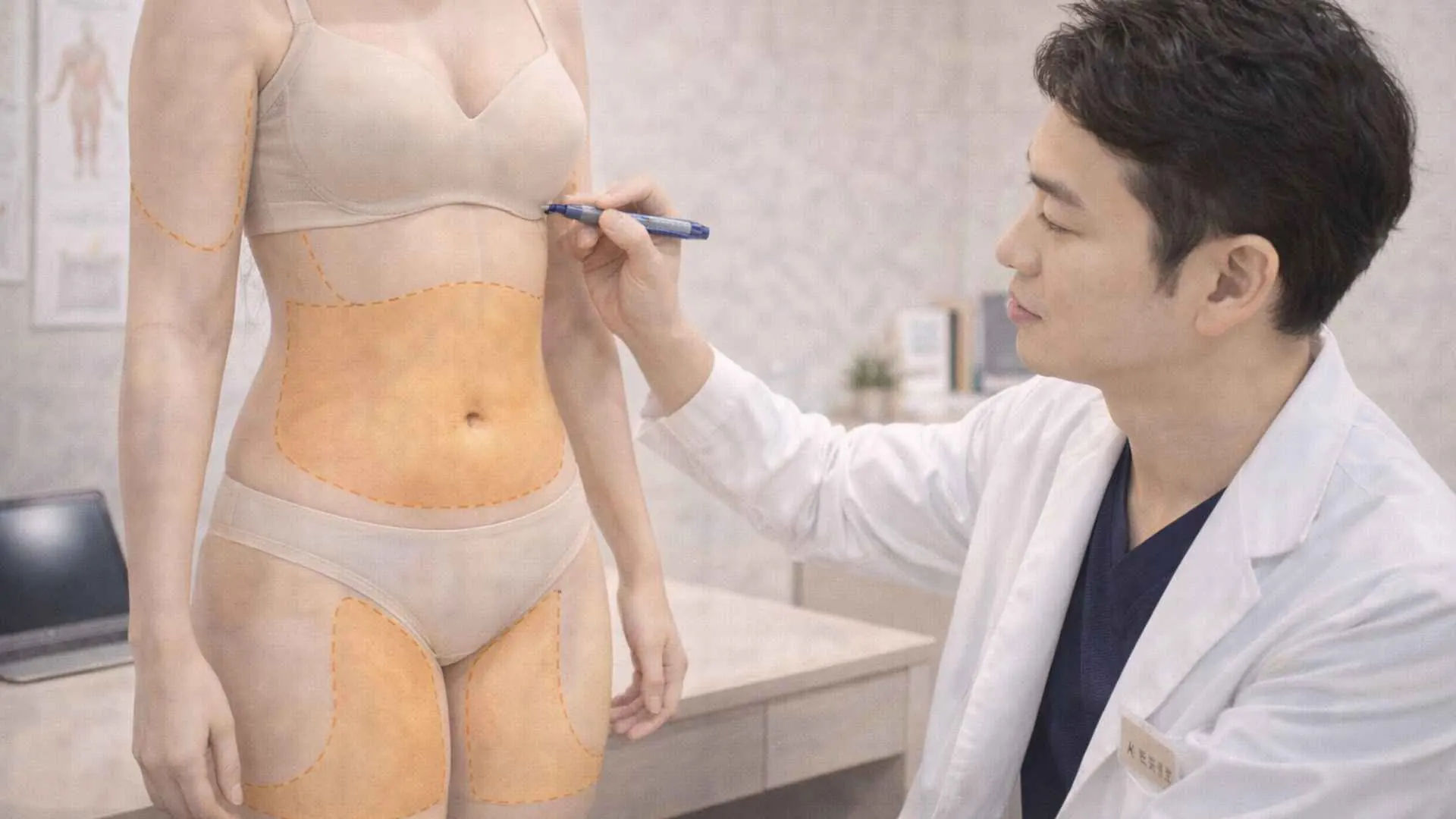
Pre-op marking: your surgeon maps exact zones. This is where artistry meets surgery.
For body contouring specialists, THE CLINIC Tokyo (English consultation available) in Roppongi is known for VASER liposuction with a focus on athletic body sculpting — popular among foreign residents. Mods Clinic (Japanese only — bring interpreter) in Ginza specializes exclusively in liposuction and fat transfer with a high volume of cases. Takako Clinic (English-speaking staff) in Shibuya handles breast augmentation with fat transfer harvested from liposuction — a two-in-one approach.
Safety and Red Flags
Liposuction is one of the more physically demanding cosmetic procedures. Unlike Botox or fillers, it's real surgery with general or twilight anesthesia, significant fluid shifts, and serious potential complications. In Japan, the complication rate at reputable clinics is low, but it is not zero — and the risks are ones foreign patients should understand before boarding a flight.
Serious complications you should know about:
Fat embolism: Fat particles entering the bloodstream can travel to the lungs or brain. Rare but potentially fatal. Risk rises with higher extraction volumes.
Pulmonary embolism / DVT (deep vein thrombosis): Blood clots in the leg that can travel to the lungs. Long-haul flights shortly after surgery increase this risk substantially.
Lidocaine toxicity: Tumescent anesthesia uses large volumes of dilute lidocaine. Overdose is a known mortality cause in liposuction. A reputable surgeon will not exceed safe dosing.
Skin necrosis and contour irregularity: Over-aggressive extraction or poor technique can damage the dermis, causing permanent dimpling, waves, or areas of dead skin.
Infection and seroma: Fluid collections and bacterial infection require drainage and antibiotics. Harder to manage if you've already flown home.
Published mortality rates for liposuction are typically cited in the range of 1 in 5,000 to 1 in 50,000 depending on technique, volume, and whether it's combined with other procedures. These numbers are low but not zero. Multi-area or large-volume liposuction carries higher risk than single-area work.
Flight timing — the DVT/PE consideration:
Long-haul flights in the first two weeks after liposuction raise the risk of deep vein thrombosis and pulmonary embolism, because prolonged sitting combined with post-surgical clotting tendency is a known risk factor. Many plastic surgeons recommend waiting at least 14 days before intercontinental flights, and even longer (3–4 weeks) for larger-volume procedures or patients with additional risk factors (obesity, hormonal contraceptive use, history of clotting disorders, smoking).
The 7–10 day "you can fly home" number you'll see on some clinic websites is the minimum for wound stability, not the optimum for clot safety. Discuss your specific flight-home timing with your surgeon and disclose any DVT risk factors at consultation.
Questions to ask your surgeon:
年間何件の脂肪吸引を行っていますか? (nenkan nanken no shibou kyuuin wo okonatte imasu ka?) = "How many liposuction procedures do you perform per year?" You want 100+ annually.
この部位の症例写真を見せてください (kono bui no shourei shashin wo misete kudasai) = "Please show me before/after photos for this area."
合併症が起きた場合の対応体制を教えてください (gappeishou ga okita baai no taiou taisei wo oshiete kudasai) = "What is your protocol if a complication occurs?" Ask specifically about after-hours contact, emergency hospital affiliation, and follow-up responsibility after you return home.
帰国までの推奨期間はどれくらいですか? (kikoku made no suishou kikan wa dorekurai desu ka?) = "What is the recommended period before I can fly home?"
Look for 日本形成外科学会認定専門医 (board-certified plastic surgeon). Budget chains sometimes have doctors who are technically licensed but lack specific liposuction training. For a ¥1M+ procedure, you want someone who does this every day, not once a month.
Foreign patient note: Liposuction complications may not appear until several days or weeks post-op — exactly when most medical tourists have already flown home. Before booking, confirm: (1) the clinic can do a video follow-up if needed, (2) you have a plan for local care in your home country should a problem arise, (3) Japan's adverse drug/device compensation system (医薬品副作用被害救済制度) does not cover surgical complications — your own travel or supplemental insurance is the only financial safety net for follow-up treatment abroad.
FAQ
How much does liposuction cost in Japan?
Under chin: ¥150,000–500,000. Abdomen: ¥300,000–1,300,000. Thighs: ¥400,000–1,600,000. Arms: ¥200,000–850,000. VASER is 20–40% more than traditional. Japan is 40–60% cheaper than the US.
What is VASER liposuction?
Ultrasound-assisted liposuction. Liquefies fat before suction for smoother results and less bruising. Premium option in Japan, available at most major clinics.
Can foreigners get liposuction in Japan?
Yes, tourist visa is fine. Plan at least 14 days: consultation, surgery, recovery, and follow-up. Bring translated medical history and reference photos. Compression garment worn for 2–4 weeks. Long-haul flights in the first 14 days raise DVT/PE risk.
How long is recovery?
Walk same day. Peak swelling days 3–5. Most surgeons recommend waiting at least 14 days before long-haul flights to reduce DVT/PE risk (longer for large-volume cases). Final results at 3–6 months. Bruising fades in 2–3 weeks.
Is it safe?
Liposuction is real surgery with serious potential complications: fat embolism, pulmonary embolism, DVT, lidocaine toxicity, skin necrosis, and infection. Reported mortality: 1 in 5,000–50,000 depending on technique and volume. Low but not zero. Look for 日本形成外科学会認定専門医 credential, avoid same-day surgery pressure, and plan on a minimum 14-day stay before long-haul flight.
What's the monitor discount?
15–50% off if you allow before/after photos for marketing. Face not shown for body procedures. Requires follow-up photo visits — hard for tourists who can't return.
Related Guides
Sources & references: Pricing and technique information referenced from BIANCA Clinic, TCB, and Plaza Clinic, accessed March 2026. Prices and protocols may change; verify directly with your chosen clinic before booking.
Medical disclaimer: This content is for informational purposes only and does not constitute medical advice, diagnosis, or treatment. Individual results vary. Always consult a qualified medical professional before undergoing any cosmetic procedure. ClinicJapan is an editorially independent guide. Some clinics mentioned may be advertising partners; any partnership is disclosed on the page and never affects prices, rankings or recommendations.
Get Your Free Clinic Plan
Tell us what you want. We'll send you a personalized recommendation
with real prices, English-friendly clinics, and booking tips — free.
Free · No spam · Reply within 24 hours