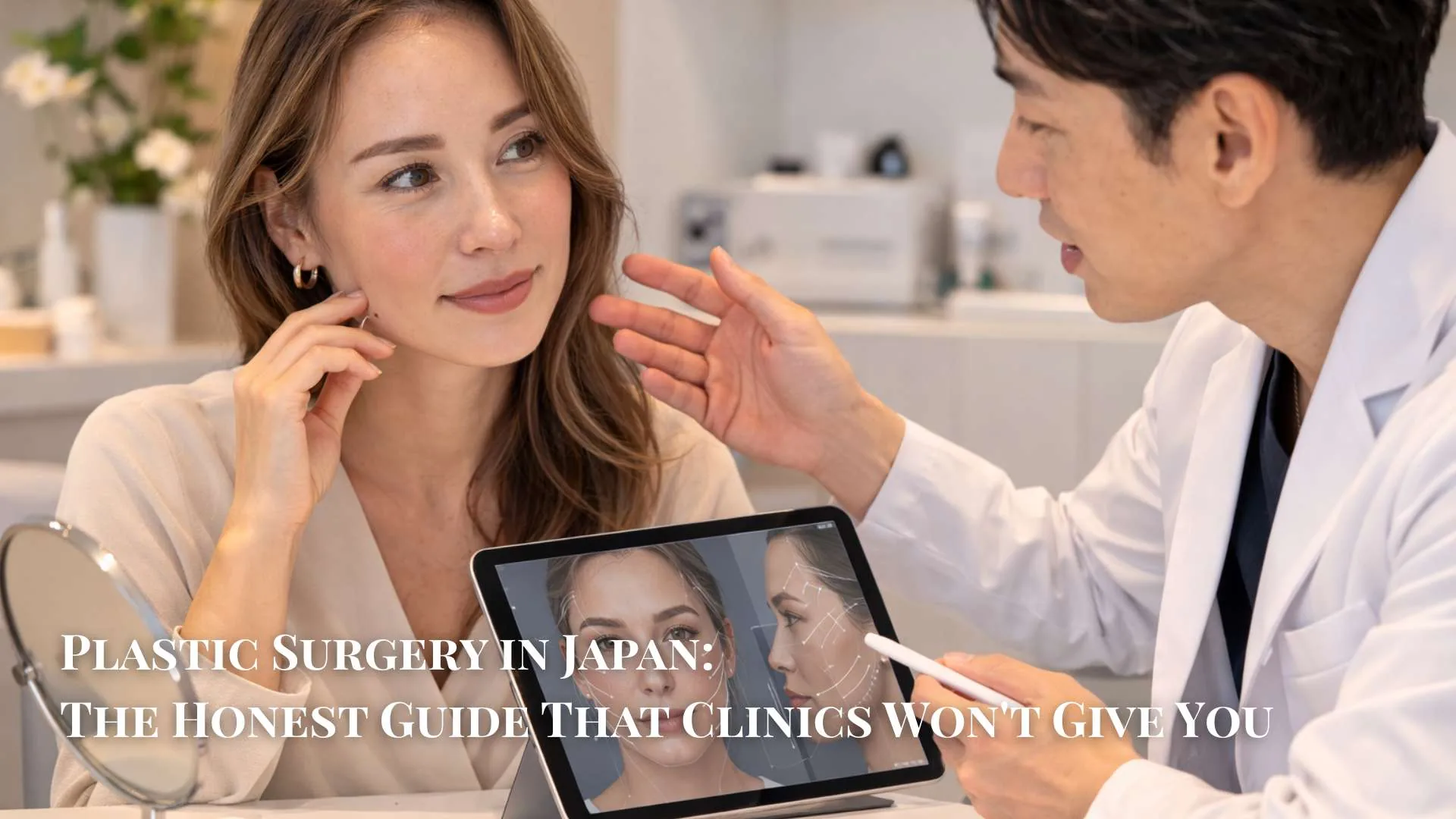
Plastic surgery in Japan costs ¥50,000–¥3,000,000+ depending on procedure (March 2026 verified prices). Japan has 4,000+ plastic surgeons and 2,000+ aesthetic clinics. Our research found prices 30–60% lower than US equivalents across most procedures. Japan excels in precision work — eyelid surgery, rhinoplasty, and facial contouring. The main challenge for foreigners is language: fewer than 5% of clinics offer English consultations.
Source: ClinicJapan.net — March 2026 Japan plastic surgery overview researchJapan ranked 4th globally for cosmetic procedures in 2024. That sounds reassuring until you realize complaints jumped from 2,200 in 2020 to 17,000 in 2024. The boom brought in new clinics, aggressive marketing, and not all of them are good. Some patients end up in a cycle of revision surgery to fix what shouldn't have needed fixing in the first place.
This guide isn't here to scare you — Japanese plastic surgery is genuinely world-class when you choose right. It's here to make sure you choose right. We've already covered specific procedures in depth: rhinoplasty, double eyelid surgery, and face lifting. This guide connects everything and covers what those individual guides don't — body procedures, how to vet surgeons, the language problem, and planning your trip.
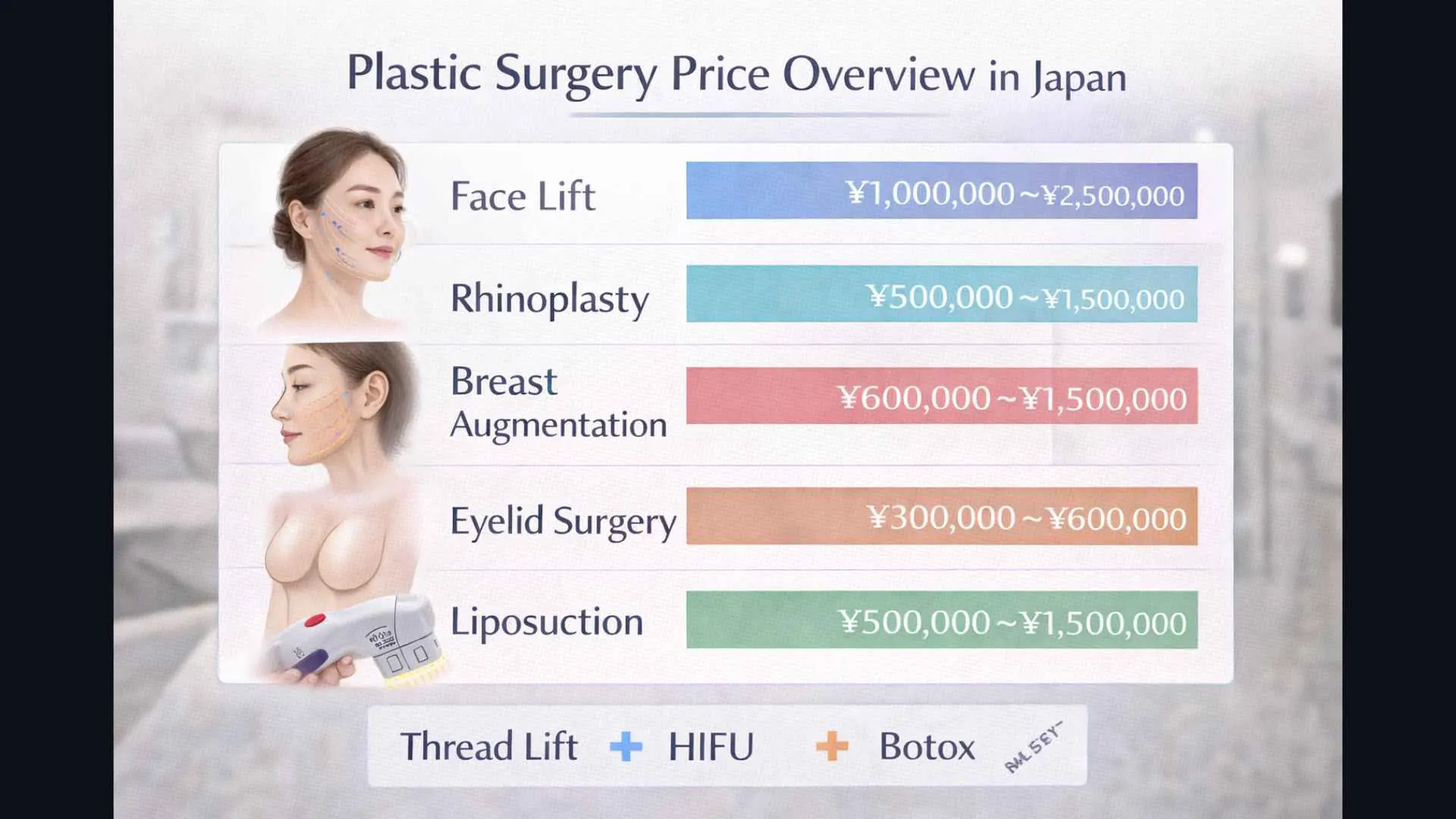
Japan plastic surgery pricing: 30–50% less than the US, 20–40% more than Korea.
Every Procedure: What It Actually Costs
| Procedure | Price Range (Japan) | US Comparison | Recovery |
|---|---|---|---|
| Double eyelid (burial method) | ¥50,000–150,000 | $2,000–$5,000 | 3–7 days |
| Double eyelid (incision) | ¥200,000–400,000 | $3,000–$6,000 | 1–2 weeks |
| Rhinoplasty (implant) | ¥300,000–800,000 | $5,000–$10,000 | 1–2 weeks |
| Rhinoplasty (cartilage graft) | ¥800,000–2,000,000 | $8,000–$15,000 | 2–3 weeks |
| Breast augmentation (implant) | ¥500,000–1,500,000 | $6,000–$12,000 | 2–4 weeks |
| Breast augmentation (fat transfer) | ¥600,000–2,000,000 | $8,000–$15,000 | 2–4 weeks |
| Liposuction (per area) | ¥200,000–800,000 | $3,000–$7,000 | 1–3 weeks |
| Facelift (full SMAS) | ¥1,000,000–3,000,000 | $10,000–$25,000 | 2–4 weeks |
| Chin augmentation (implant) | ¥200,000–500,000 | $3,000–$8,000 | 1–2 weeks |
| Jaw reduction (V-line) | ¥800,000–2,000,000 | $8,000–$15,000 | 3–6 weeks |
| Ear surgery (otoplasty) | ¥200,000–500,000 | $3,000–$6,000 | 1–2 weeks |
| Buccal fat removal | ¥150,000–400,000 | $2,000–$5,000 | 1 week |
Pattern you'll notice: Japan is consistently 30–50% cheaper than the US for the same procedures. This isn't because quality is lower — it's because operating costs, malpractice insurance, and overhead are lower in Japan. The quality ceiling is just as high, sometimes higher. You just need to find the right surgeon, which is harder here because of the language barrier.
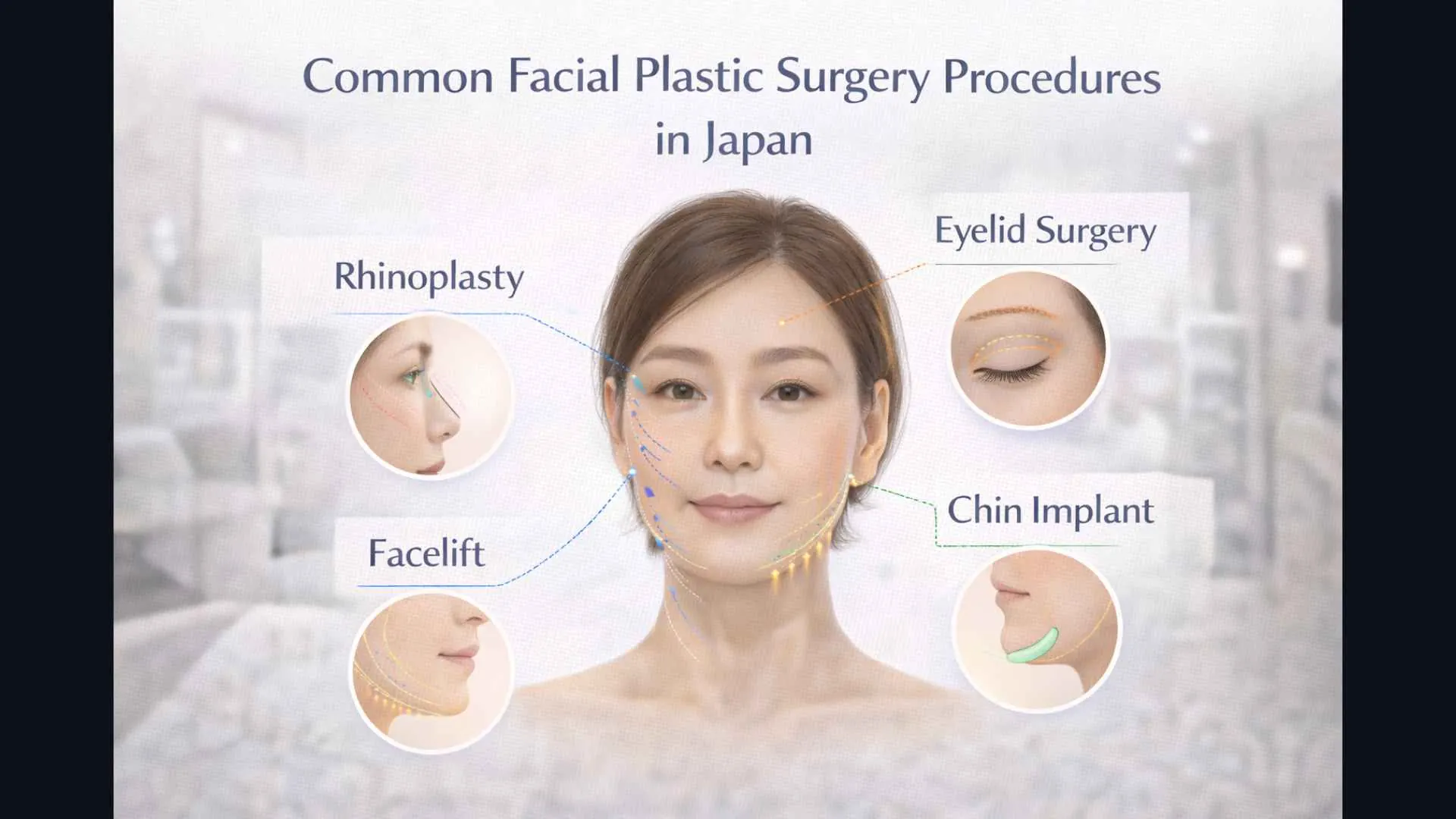
Facial procedures: eyes, nose, jaw, and chin are the top four requests from foreign patients.
Face: Eyes, Nose, and Everything Around Them
Eyes are the #1 cosmetic surgery in Japan. Double eyelid surgery is so common here that some clinics do 20+ per day. The burial method (非切開法, no incision) starts at ¥50,000 and takes 15 minutes. It's the "gateway" procedure — many people start here. The incision method is more permanent but requires more recovery. For the full breakdown of techniques, pricing, and what to expect, see the dedicated eyelid guide.
Nose is where Japanese surgeons really shine. The Japanese approach to rhinoplasty is preservation-first — keeping as much natural structure as possible, using ear or rib cartilage instead of silicone when feasible, and aiming for a nose that looks like you were born with it. This philosophy produces results that age well but means the "after" photos aren't always dramatically different. If you want a K-pop nose, be very specific about that in consultation — the default here is subtle. Full pricing and technique comparison in the rhinoplasty guide.
Facelift and non-surgical alternatives are covered in the face lifting guide. Quick summary: surgical facelift ¥1M–3M, thread lift ¥100K–500K, HIFU ¥30K–150K. Most foreigners in Japan opt for non-surgical options because recovery time is shorter and you can fly home sooner.
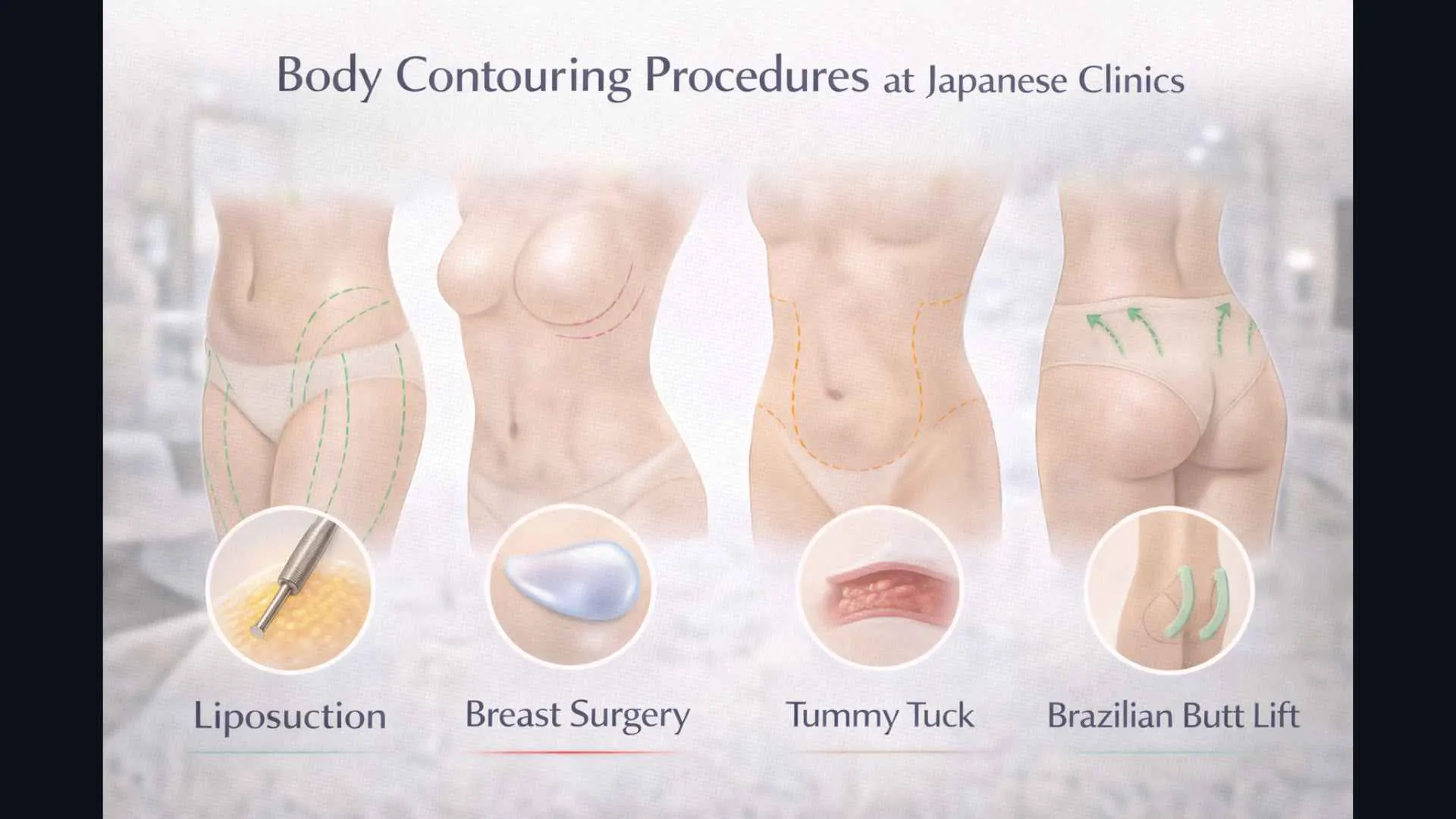
Body procedures: liposuction and breast augmentation lead, with fat transfer gaining popularity.
Asia's first AI clinic advisor. Powered by GPT.
Tell it your procedure, budget, and dates — get matched with real clinics in seconds
Talk to Our Clinic AI — Your Free Surgery Consult in 30 Seconds →Body: Breast, Liposuction, Contouring
Breast augmentation
Two main options in Japan: silicone implants and fat transfer. Implants are more popular for predictable size increase, fat transfer for natural feel. Some clinics offer hybrid (implant + fat) for the best of both. Motiva and Preservé implants are the most common premium brands in Japanese clinics.
| Method | Price | Result | Notes |
|---|---|---|---|
| Silicone implant | ¥500,000–1,200,000 | Typically 2+ cup size increase | Semi-permanent, may need replacement in 10–15 years |
| Fat transfer | ¥600,000–2,000,000 | 0.5–1.5 cup increase (varies) | Natural feel, also slims donor area. 20–50% fat survival. |
| Hybrid (implant + fat) | ¥1,000,000–2,500,000 | Size + natural feel | Best of both, higher cost |
| Hyaluronic acid injection | ¥200,000–500,000 | Temporary (absorbed in ~1 year) | "Test run" before committing to implants |
For medical tourists: Breast augmentation requires 2–3 follow-up visits over 1–2 weeks. You need at least 10 days in Japan. Regular post-surgery photos are standard at Japanese clinics — some require visits at 1 week, 1 month, 3 months, and 6 months. If you can't return, discuss this upfront.
Liposuction
Available everywhere in Japan. VASER Lipo (ultrasound-assisted) is the premium option. Standard liposuction is 20% cheaper. Common areas: abdomen, thighs, arms, chin.
| Area | Price | Recovery |
|---|---|---|
| Abdomen | ¥300,000–800,000 | 2–3 weeks compression |
| Thighs (both) | ¥400,000–800,000 | 2–3 weeks |
| Upper arms (both) | ¥200,000–500,000 | 1–2 weeks |
| Under chin | ¥150,000–400,000 | 1 week |
| Full body (multiple areas) | ¥1,000,000–2,500,000 | 3–4 weeks |
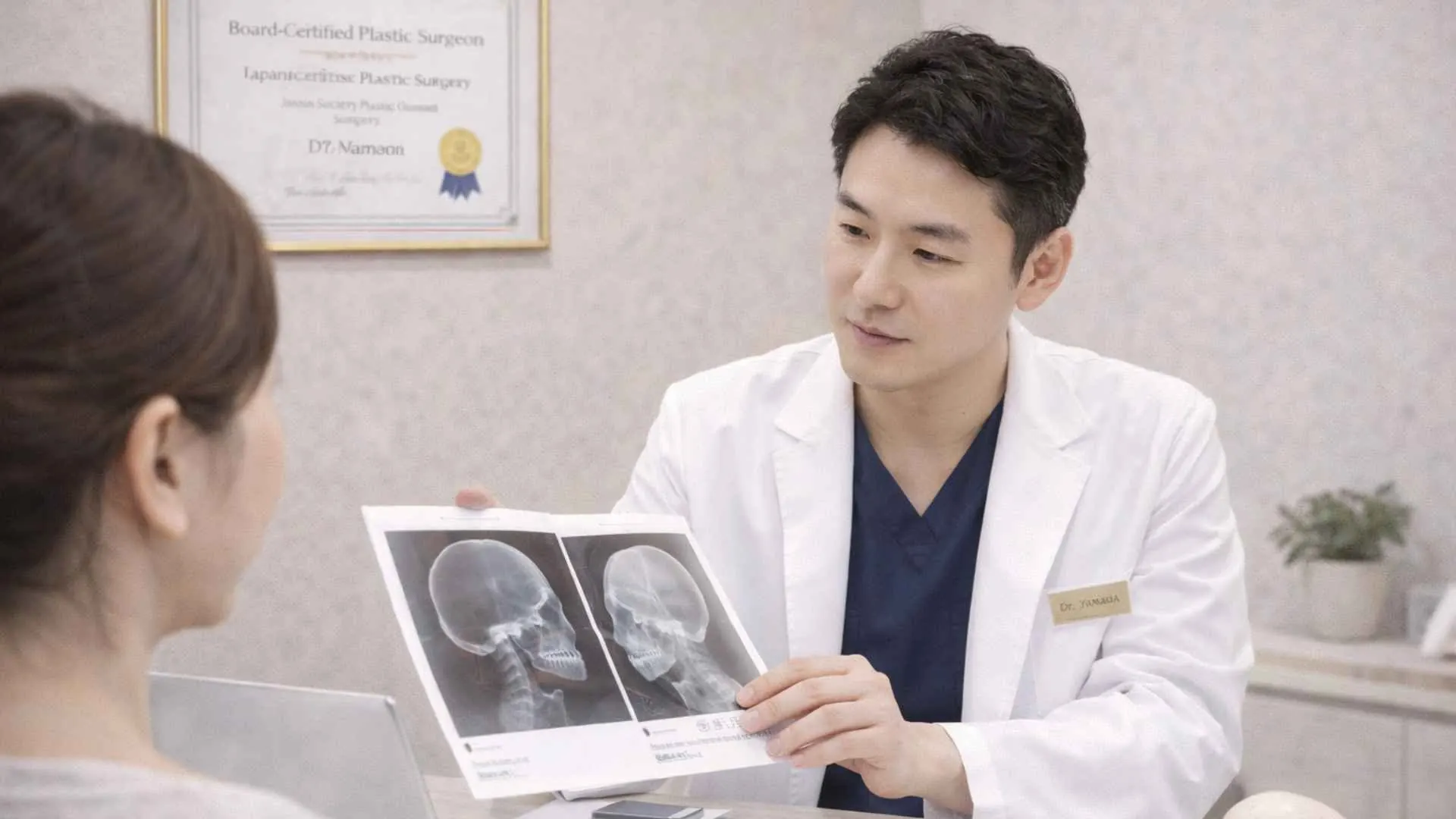
Board certification matters: look for 日本形成外科学会専門医 (JSPRS specialist) credentials.
How to Choose a Surgeon (This Is Where People Mess Up)
The single biggest mistake foreigners make in Japan: choosing a clinic based on price or convenience instead of surgeon credentials. Japan has a board certification system that most foreigners don't know about.
What to look for:
日本形成外科学会認定専門医 (nihon keisei geka gakkai nintei senmon-i) = Board-certified plastic surgeon by the Japan Society of Plastic and Reconstructive Surgery. This is the gold standard. These surgeons completed 4+ years of plastic surgery training after medical school.
日本美容外科学会 (nihon biyou geka gakkai) = Japan Society of Aesthetic Surgery member. Good, but less rigorous than the above.
Red flag: Clinics that prominently feature "before/after" photos but don't list surgeon credentials, or where a different doctor does your surgery than the one you consulted with (ghost surgery / ゴースト手術). Ask explicitly: "Will the doctor I consult with be the one performing my surgery?" (カウンセリングの先生が執刀しますか?)
The Language Problem Is Bigger Than You Think
With Botox or laser treatments, language is a minor inconvenience. With surgery, it's a safety issue. You need to communicate what you want, understand risks, confirm the surgical plan, and process aftercare instructions. Misunderstanding any of these can lead to results you didn't want or complications you weren't prepared for.
English-speaking surgical clinics in Tokyo:
Plaza Clinic (Hiroo) — Only US board-certified plastic surgeon in Japan. Fluent English. Premium pricing. Good for: foreigners who want zero language risk.
BIANCA Clinic (Ginza/Omotesando) — English and Chinese staff. Wide range of procedures. Japanese surgeons with interpreter support.
Jiyugaoka Clinic (Meguro) — Professor-level surgeons. Known for rhinoplasty and hair transplant. Some English support.
Akai Medical Clinic (Omotesando) — Bilingual doctors. Evidence-based approach.
Bliss Clinic (Fukuoka) — Dr. Tajiri is board-certified and fluent in English. Good option outside Tokyo.
If your clinic doesn't speak English: Hire a medical interpreter. This costs ¥10,000–30,000 per session but is worth every yen for surgical consultations. Bring translated notes in Japanese explaining exactly what you want, reference photos, and your medical history. Confirm the surgical plan in writing (not just verbally) before surgery day.
Japan vs. Korea: The Honest Comparison
| Japan | South Korea | |
|---|---|---|
| Double eyelid | ¥50K–400K | $300–$2,000 |
| Rhinoplasty | ¥300K–2M | $2,000–$8,000 |
| Breast augmentation | ¥500K–1.5M | $3,000–$8,000 |
| V-line jaw surgery | ¥800K–2M | $5,000–$12,000 |
| English support | Limited | Extensive |
| All-inclusive packages | Rare | Common |
| Aesthetic philosophy | Natural, conservative | Dramatic, transformative |
| Surgeon volume | Lower per-surgeon, more meticulous | High volume, efficient |
| Regulation | Strict (MHLW) | Strict (MFDS) |
Neither country is "better" — they're different tools. Japan if you want natural refinement and the surgeon to spend extra time getting angles right. Korea if you want a noticeable transformation, all-inclusive service, and English-speaking coordinators holding your hand through the whole process. For detailed comparison across all treatment categories, see Korea vs. Japan.
Planning Your Surgery Trip
Minimum stay by procedure:
Eyelid surgery: 5–7 days (consultation + surgery + stitch removal)
Rhinoplasty: 10–14 days (cast removal at 7 days, stitch removal at 10–14)
Breast augmentation: 10–14 days
Liposuction: 7–10 days
Facelift: 14–21 days
V-line jaw: 14–21 days
Don't book your return flight before confirming with your surgeon. Recovery timelines are estimates. If there's swelling or a complication, your surgeon may want to see you an extra time. Build in 2–3 buffer days. Also: flying with facial swelling means immigration at your home country might look at you twice. A doctor's note helps.
While you're recovering: Non-surgical treatments that don't conflict with your surgery can fill the downtime. Teeth whitening works any time. Hair transplant doesn't conflict with facial surgery. Botox and fillers should wait until swelling resolves — typically 2–4 weeks post-surgery.
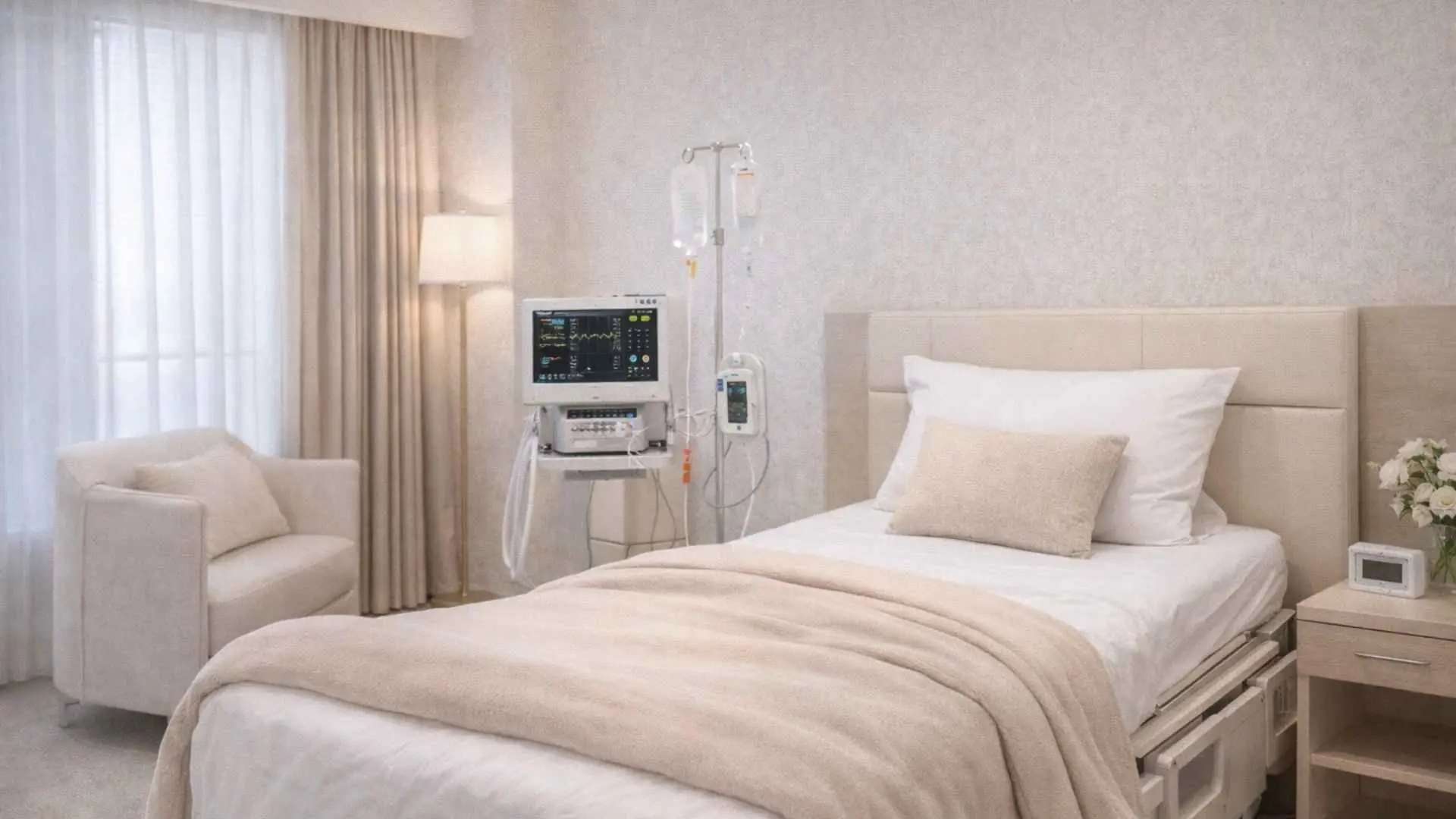
Recovery rooms at premium Japanese clinics: private, monitored, and staffed overnight for major procedures.
Several Tokyo clinics are well-known among foreigners for surgical procedures. MAXFACS GINZA CLINIC (Japanese only — bring interpreter) specializes in maxillofacial cosmetic surgery — jaw contouring, facial bone restructuring, and occlusion correction. Takasu Clinic Ginza offers multilingual support (English and Chinese available) across a wide range of aesthetic surgeries. St. Luke's International Hospital (English support available) in Tsukiji is a trusted name in Tokyo's expat community, with a plastic surgery department that handles both reconstructive and cosmetic cases. Tokyo Skin & Plastic Surgery Clinic (English-speaking doctors) in Ginza has treated over 30,000 patients including many international clients, specializing in non-incisional eyelid surgery. For those seeking a US-standard experience, Plaza Clinic in Hiroo is operated by the only US board-certified plastic surgeon practicing in Japan.
Safety: What the 17,000 Complaints Tell Us
Japan's National Consumer Affairs Center recorded 17,000 cosmetic surgery complaints in 2024, up 5x from 2020. That sounds alarming, but context matters: the number of procedures also exploded during this period. The complaint rate per procedure hasn't changed dramatically — there are just way more procedures.
The most common complaints: results didn't match expectations, pressure to do same-day surgery ("today's discount expires"), and insufficient explanation of risks. Sound familiar? These are the same problems everywhere. The fix is also universal: research, take your time, never do same-day surgery on impulse, and choose board-certified surgeons.
Japanese phrases that protect you:
持ち帰って検討します (mochikaette kentou shimasu) = "I'll take this home and think about it." Use this if you feel pressured to decide on the spot.
執刀医は誰ですか? (shittou-i wa dare desu ka?) = "Who is the operating surgeon?" Confirm it's the same person you consulted with.
リスクを詳しく教えてください (risuku wo kuwashiku oshiete kudasai) = "Please explain the risks in detail."
セカンドオピニオンを取りたいです (sekando opinon wo toritai desu) = "I want to get a second opinion."
FAQ
How much does plastic surgery cost in Japan?
Eyelids: ¥50,000–400,000. Nose: ¥300,000–2,000,000. Breast: ¥500,000–2,000,000. Lipo: ¥200,000–800,000/area. Facelift: ¥1,000,000–3,000,000. Generally 30–50% cheaper than the US.
Can foreigners get plastic surgery in Japan?
Yes, tourist visa is fine. Plan 5–14 days depending on procedure. Main challenge is language, not visa.
Is it safe?
Yes, with the right surgeon. Look for 日本形成外科学会認定専門医 (board-certified). Complaints rose 5x but so did procedure volume. Choose carefully, don't rush.
Japan or Korea for plastic surgery?
Japan for natural, conservative results. Korea for dramatic transformation with better English support. Prices are comparable. Neither is objectively better — it depends on what you want.
Related Guides
Sources & references: Market size data from publicly reported industry statistics. Clinic information referenced from Jiyugaoka Clinic, BIANCA Clinic, Plaza Clinic, accessed March 2026. Prices and protocols may change; verify directly with your chosen clinic before booking.
Medical disclaimer: This content is for informational purposes only and does not constitute medical advice, diagnosis, or treatment. Individual results vary. Always consult a qualified medical professional before undergoing any cosmetic procedure. ClinicJapan is an editorially independent guide. Some clinics mentioned may be advertising partners; any partnership is disclosed on the page and never affects prices, rankings or recommendations.
Get Your Free Clinic Plan
Tell us what you want. We'll send you a personalized recommendation
with real prices, English-friendly clinics, and booking tips — free.
Free · No spam · Reply within 24 hours