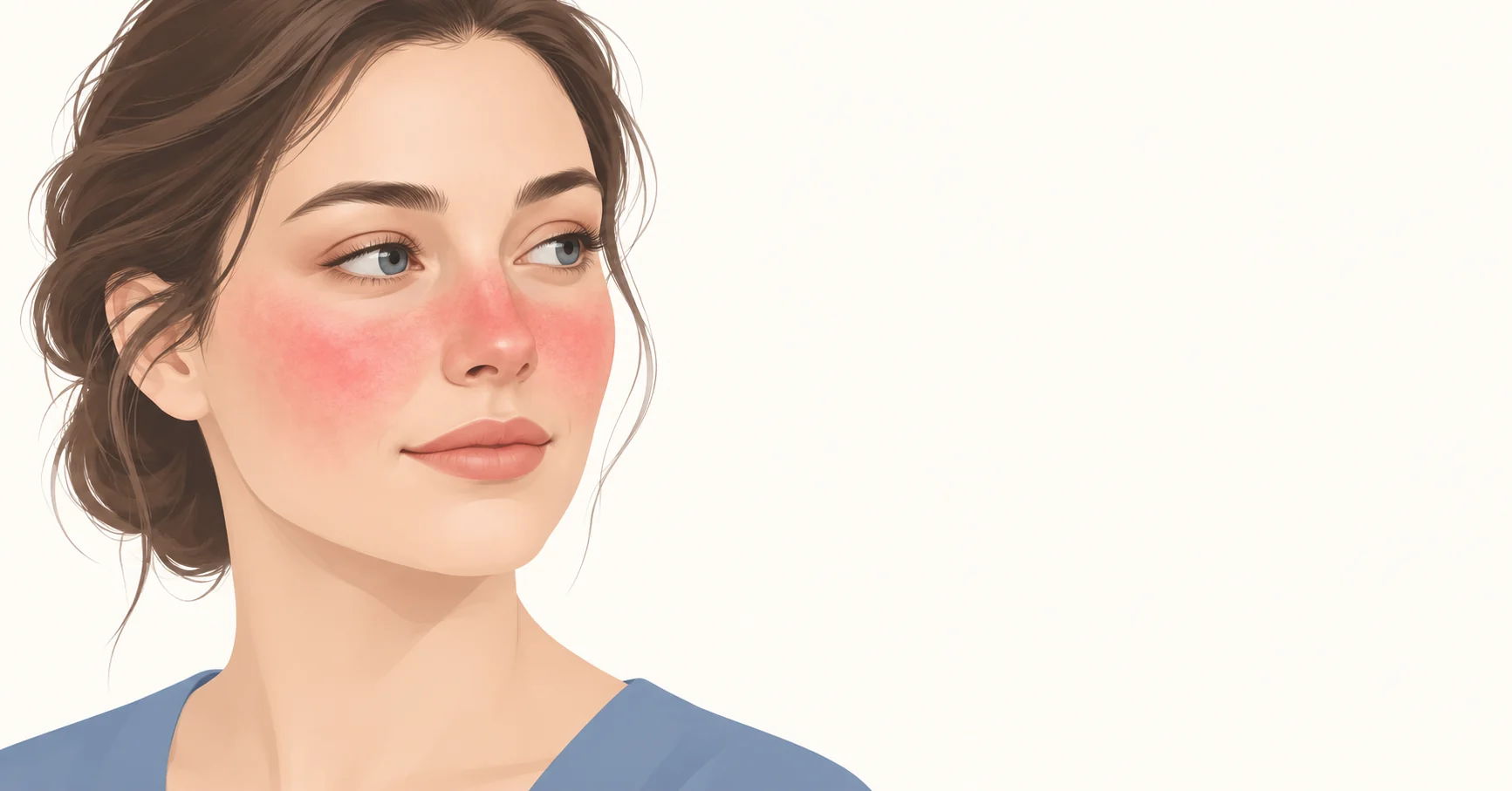
1. Rosacea is several problems: which do you have?
Rosacea is a long-term inflammatory skin condition of the central face: the cheeks, nose, chin and forehead, and sometimes the eyes. A 2018 meta-analysis of 32 studies covering more than 26 million people estimated that 5.46% of adults have it. Dermatologists now describe it by its features rather than by a single “type”, because many people have more than one, and each feature responds to different treatment. That is the main reason rosacea advice online is so contradictory: a cream that clears bumps does little for redness, and a laser aimed at vessels has little evidence for bumps.
| Feature | What it looks like | Treatment family |
|---|---|---|
| Flushing | Episodes of heat and redness with triggers such as heat, alcohol or hot drinks | Trigger control; some redness treatments help |
| Persistent redness | Background redness of the central cheeks and nose that does not fully fade | Vessel-narrowing gels (temporary); laser or IPL |
| Visible vessels | Fine red lines on the cheeks and nose | Vascular laser or IPL |
| Bumps and pustules | Acne-like spots in the red areas, but without blackheads | Ivermectin, azelaic acid, metronidazole, low-dose doxycycline |
| Eye symptoms | Gritty, dry, red or irritated eyes and eyelids | Lid hygiene, antibiotics, eye-specific treatment |
| Thickened skin | Coarse, enlarged skin, most often on the nose (rhinophyma) | Surgery or CO2 laser |
Getting the diagnosis right matters before you buy anything. Rosacea is easy to confuse with seborrhoeic dermatitis, acne and simple irritation, and a 2024 review by a Japanese dermatologist notes that it is particularly hard to diagnose in East Asian and darker skin when redness is the only sign. Our facial redness guide covers how to tell these apart; this guide assumes a doctor has confirmed rosacea.
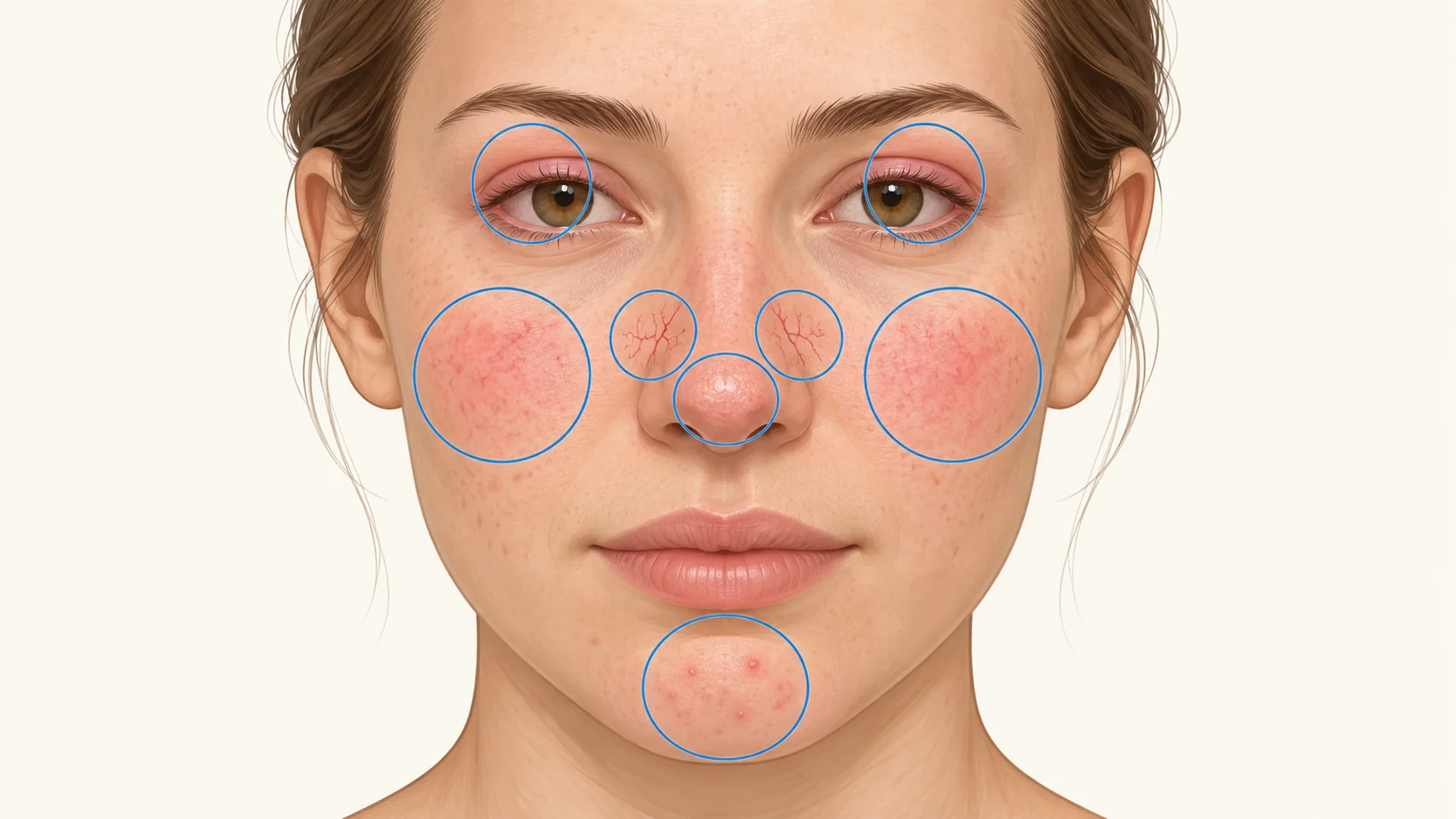
2. What drives flares
Nobody knows exactly what causes rosacea, but the pieces are well described. The East Asian review lists microbes on the skin, temperature changes, sunlight, physical exertion, emotional stress, hot drinks, spicy food and airborne pollen as triggers or aggravating factors, acting on a genetic tendency. It also notes that East Asian skin tends to have a weaker barrier and to react more to irritants, and that pollen may be a particular trigger in East Asian people. Anyone visiting Japan during the spring cedar-pollen season may notice this.
Skin mites are part of the story. Everyone has tiny Demodex mites in their hair follicles, but a meta-analysis of 23 case-control studies found that people with rosacea had about nine times the odds of Demodex infestation (odds ratio 9.0) and higher mite densities, in both the redness-dominant and the bumps-dominant forms. The authors were careful to say this shows an association, not proof that mites cause rosacea. It may help explain why an anti-parasitic cream, ivermectin, works well on the bumps.
3. Bumps and pustules: the best-evidenced part
A large 2019 systematic review of 152 randomised trials and 20,944 participants graded with the GRADE system, found high-certainty evidence for two creams against bumps and pustules: ivermectin and azelaic acid. It rated low-dose doxycycline 40 mg modified-release and isotretinoin as moderate-to-high certainty, and topical metronidazole as moderate certainty. Topical and oral minocycline were about as effective as doxycycline 40 mg.
Ivermectin and metronidazole have been compared head to head. In a 962-patient trial, after 16 weeks once-daily ivermectin 1% cream reduced inflammatory lesions by 83.0% versus 73.7% for twice-daily metronidazole 0.75%, and 84.9% versus 75.4% of patients were rated clear or almost clear. When treatment stopped in those rated clear or almost clear, the first relapse came at a median of 115 days after ivermectin versus 85 days after metronidazole, and the median number of treatment-free days was higher (196 vs 169.5).
For severe rosacea, a cream and a tablet together worked faster. In a 273-patient trial in severe rosacea, ivermectin cream plus doxycycline 40 mg reduced lesions by 80.3% versus 73.6% with ivermectin alone, and more patients had no inflammatory lesions left at 12 weeks (17.8% vs 7.2%). The 40 mg modified-release form is a low dose without antibacterial action, according to Japan’s guideline, but it is still a prescription drug: a doctor decides whether it suits you. It is not available in Japan, where doctors use standard doxycycline or minocycline tablets off-label.
| Treatment | Evidence (2019 GRADE review) | Notes |
|---|---|---|
| Ivermectin 1% cream | High certainty | Once daily; beat metronidazole and kept bumps away longer after stopping |
| Azelaic acid | High certainty | Can sting at first on sensitive skin |
| Doxycycline 40 mg modified-release | Moderate to high | Tablet; often added for severe or widespread bumps. Not available in Japan |
| Metronidazole 0.75% | Moderate | The only medicine with grade A in Japan’s guideline, and insurance-listed for rosacea there (section 8) |
| Isotretinoin | Moderate to high | Specialist-only; causes serious birth defects, so strict pregnancy prevention is required. Not approved in Japan |
4. Redness and visible vessels
Background redness is harder. The 2019 review found high-certainty evidence for brimonidine gel and moderate certainty for oxymetazoline cream, both of which narrow blood vessels. The catch is that the effect is temporary: they reduce redness for part of the day and the redness returns. For redness with visible vessels, the review found low-to-moderate-certainty evidence for laser and intense pulsed light (IPL). The Japanese Dermatological Association’s 2023 guideline makes the same distinction: it suggests pulsed dye laser, long-pulse Nd:YAG laser or IPL as one option for redness-dominant rosacea, and does not recommend any single cream or tablet for it.
Lasers and IPL are where a trip to Japan can help, because the devices are widely available at many clinics. Our facial redness guide covers how pulsed dye laser and IPL compare in the research, and what to ask before a session. One point to know in advance: laser for rosacea redness is usually private-pay in Japan. Insurance covers pulsed dye laser only for specific diagnoses such as telangiectasia, and the doctor decides whether you qualify. For short-term visitors it is self-pay either way (section 8).
5. Eye rosacea: easy to miss
Rosacea can affect the eyes and eyelids, causing grittiness, dryness, redness, crusting at the lid margins and recurring styes. Estimates of how many people with rosacea have eye involvement range widely, from 6% to 72%, partly because it is poorly studied. A 2024 systematic review of 66 studies and 1,275 patients found the highest response rates with topical antimicrobials (91% complete or partial response) and oral antibiotics (89%), followed by IPL (89% partial response), ciclosporin eye drops (87%) and lid hygiene (65%), although the studies did not compare treatments directly. The 2019 GRADE review found moderate-certainty evidence for oral omega-3 fatty acids.
6. Thickened skin and rhinophyma
In a minority of people, mostly older men, rosacea thickens the skin, most often on the nose (rhinophyma). Creams do little once the skin has thickened. A 2026 systematic review of 2,720 patients found that the most common treatments were surgical excision (49.0%) and CO2 laser (37.4%), with good satisfaction in 88% and improvement in 94%, while noting that methods vary and side effects occur. The review was based mostly on case reports, case series and observational studies, so the evidence is low quality. Japan’s 2023 guideline lists surgery and laser as possibilities but does not formally recommend one approach. This is a procedure for an experienced dermatologic or plastic surgeon, with a proper follow-up plan, not a quick trip add-on.
7. Keeping it under control
Rosacea comes back. The relapse trial in section 3 is a good illustration: even after successful treatment, half of the patients had their first relapse within about 12–16 weeks of stopping (median 85–115 days, depending on the cream). The practical answer is a maintenance plan, agreed with your doctor, rather than courses that start and stop.
- Sun protection every day. Japan’s guideline recommends advice on sun protection and gentle cleansers and moisturisers as part of care. Mineral or fragrance-free sunscreens sting less on reactive skin; see our Japanese sunscreen guide.
- Gentle products only. Avoid scrubs, toners with alcohol, strong acids and anything that stings. Fewer products is usually better.
- Keep the cream that worked at the frequency your doctor suggests, instead of waiting for the next flare.
- Manage your personal triggers from the diary in section 2.
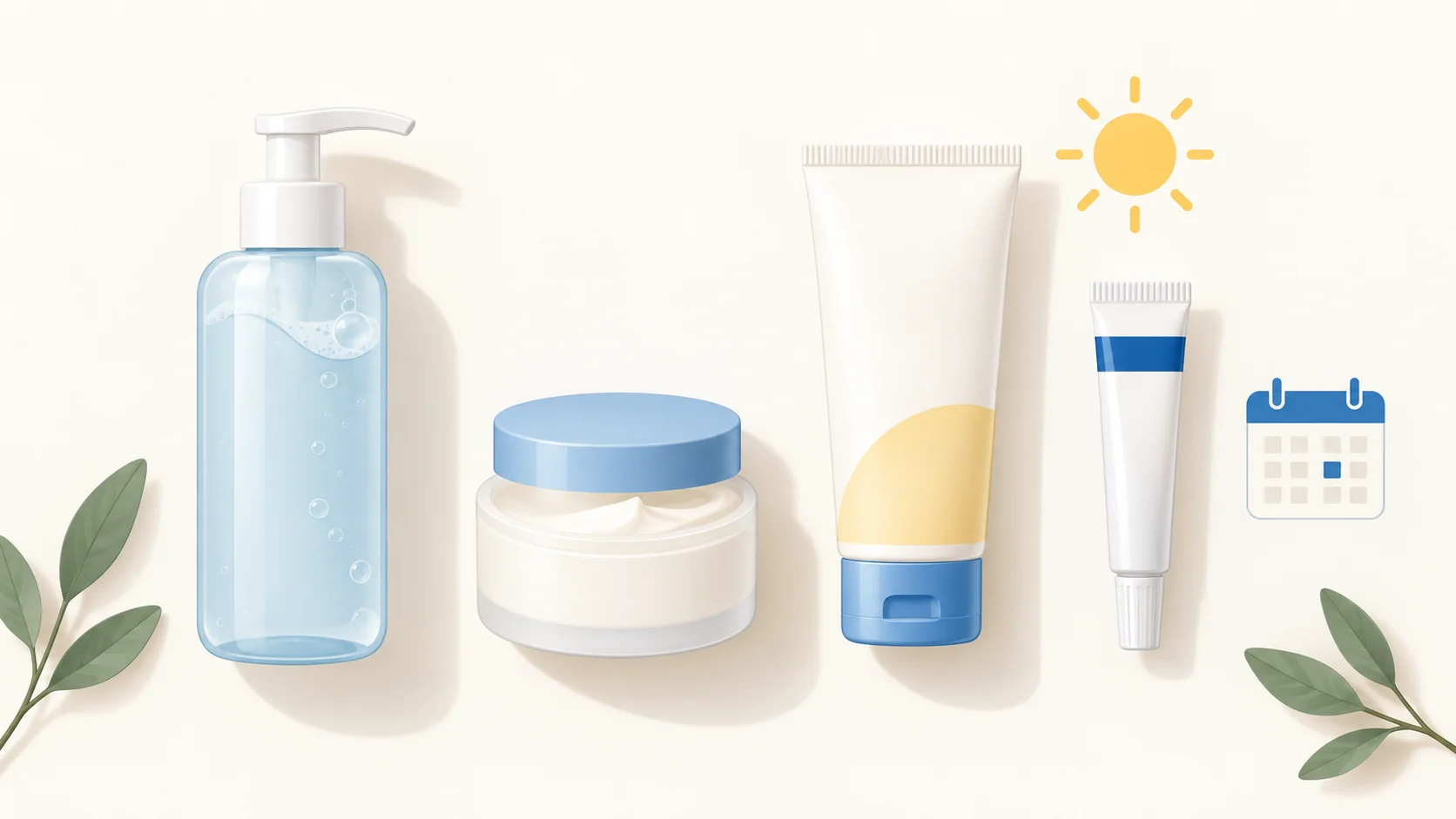
8. Rosacea treatment in Japan: what is available and what it costs
Japan was slow to approve rosacea medicines. Metronidazole 0.75% gel, sold as ロゼックスゲル (Rozex gel), had been approved since 2014 only for cancerous skin ulcers. After the Japanese Dermatological Association asked for a rosacea indication, it was approved for rosacea on 26 May 2022, with a 15 g tube added for this use. A Japanese phase 3 trial of 130 patients supported the approval: 72.3% of patients using the gel twice daily achieved more than a 50% reduction in bumps plus less redness after 12 weeks, versus 36.9% on a dummy gel. The 2023 Japanese guideline gives it the strongest recommendation (grade A) for bumps and pustules. An older sulfur-camphor lotion is also insurance-listed for rosacea, but the guideline does not recommend it for now.
The other well-studied options are not approved for rosacea in Japan. Azelaic acid, oral doxycycline, minocycline and tetracycline are listed in the 2023 guideline as options with limited Japanese evidence, and are marked as unapproved for rosacea in Japan. Some dermatology clinics therefore offer ivermectin and azelaic acid creams as private (self-pay) treatments. These are not approved medicines in Japan: the ivermectin cream we found is imported by the prescribing doctor, azelaic acid is sold in Japan as a cosmetic-grade product, and neither is covered by Japan’s relief scheme for drug side effects. The 2023 guideline does not currently recommend topical ivermectin. Brimonidine gel is likewise unapproved for rosacea but prescribed self-pay at some clinics. We did not find oxymetazoline cream offered; if you use it at home, bring enough for the trip.
| Treatment | Price | Where we checked |
|---|---|---|
| Metronidazole gel (Rozex), 10 g | ¥2,200 self-pay | Kawasaki Taniguchi Dermatology, self-pay list |
| Azelaic acid cream (AZA Clear), 15 g not an approved medicine in Japan | ¥1,980 self-pay | Same list |
| Ivermectin cream, 30 g unapproved in Japan; doctor-imported | ¥3,300 self-pay | Same list |
| V-beam Prima pulsed dye laser | Full face ¥31,800 (5 sessions ¥134,000) · cheeks ¥18,700 · nose or chin ¥8,800 | Shonan Beauty Clinic laser price list |
| IPL (Photo RF) | ¥9,980 per session (¥6,800 first time) · 5 sessions ¥44,000 | Same list |
Prices are from the clinics’ own pages and are planning figures, not quotes. Consultation fees are extra at many clinics. ClinicJapan has no partnership with the clinics listed.
A note on insurance for visitors. Short-term visitors are not covered by Japan’s national health insurance, so you pay the full fee, and clinics may set their own prices for patients without Japanese insurance. Our guide to seeing a doctor in Japan explains how a visit works.
Related concerns. Not every red face is rosacea; our facial redness guide covers the other causes. Brown marks left after flares are hyperpigmentation, and blotchy brown patches on both cheeks may be melasma. If you also have acne, see acne treatment in Tokyo and, for dents it has left, acne scars. Texture problems are covered in large pores, and the lasers clinics offer are compared in our pico laser and laser treatment guides. If you are considering a vampire facial, mention your rosacea at the consultation.
9. What we would do on a trip to Japan
- See a dermatologist first. Confirm it is rosacea, and which features you have. Bring photos of your skin on a bad day.
- Treat bumps with a cream. Ask about metronidazole (Rozex), or whether a self-pay ivermectin or azelaic acid cream suits you, and get enough to cover your time at home until you can see your own doctor.
- Treat vessels with light. If visible vessels or persistent redness bother you, a vascular laser or IPL session fits easily into a trip; plan for a course rather than a one-off.
- Get eye symptoms checked separately by an eye doctor.
- Leave with a maintenance plan: daily sunscreen, gentle products, your personal triggers, and how often to keep using the cream.
10. FAQ
11. Sources & Method
Each clinical figure is sourced to a PubMed-indexed paper or the Japanese guideline. Every PMID was found by searching PubMed, confirmed against the PubMed record, and the figures were taken from the published abstract. Japanese regulatory information is from the Japanese Dermatological Association and the manufacturer’s information pages; prices are from the clinics’ own pages, checked on 2 October 2026. Prices change and vary by clinic, so treat them as ranges, not quotes. The feature table, the trigger diary, the eye-referral advice, the maintenance list and the plan in section 9 are our editorial judgement, based on the sources below, not findings from a single paper.
| Source | Used for |
|---|---|
| Incidence and prevalence of rosacea: a systematic review and meta-analysis (PMID 29478264) Gether et al., Br J Dermatol, 2018 · 32 studies · accessed 2 Oct 2026 | 5.46% of adults (section 1) |
| Rosacea in East Asian populations: clinical manifestations and pathophysiological perspectives (PMID 39126257) Nobeyama, J Dermatol, 2024 · review · accessed 2 Oct 2026 | Triggers, pollen, East Asian skin barrier, diagnostic difficulty (sections 1, 2) |
| Role of Demodex mite infestation in rosacea: systematic review and meta-analysis (PMID 28711190) Chang & Huang, J Am Acad Dermatol, 2017 · 23 studies · accessed 2 Oct 2026 | Odds ratio 9.0; association not causation (section 2) |
| Interventions for rosacea based on the phenotype approach: updated systematic review including GRADE (PMID 30585305) van Zuuren et al., Br J Dermatol, 2019 · 152 trials, 20,944 participants · accessed 2 Oct 2026 | Certainty ratings for each treatment (sections 3, 4, 5, FAQ) |
| Superiority of ivermectin 1% cream over metronidazole 0.75% cream (PMID 25228137) Taieb et al., Br J Dermatol, 2015 · 962 patients · accessed 2 Oct 2026 | 83.0% vs 73.7%; clear or almost clear 84.9% vs 75.4% (section 3, FAQ) |
| Maintenance of remission after ivermectin vs metronidazole: 36-week extension of ATTRACT (PMID 26691278) Taieb et al., J Eur Acad Dermatol Venereol, 2016 · accessed 2 Oct 2026 | Median relapse 115 vs 85 days; treatment-free days (sections 3, 7, FAQ) |
| Ivermectin 1% cream plus doxycycline 40 mg MR vs ivermectin alone in severe rosacea (PMID 31150711) Schaller et al., J Am Acad Dermatol, 2020 · 273 patients · accessed 2 Oct 2026 | −80.3% vs −73.6%; 17.8% vs 7.2% lesion-free (section 3) |
| Metronidazole gel (0.75%) in Japanese patients with rosacea: phase 3 study (PMID 34854112) Miyachi et al., J Dermatol, 2022 · 130 patients · manufacturer-funded · accessed 2 Oct 2026 | 72.3% vs 36.9%; 2014 approval for cancer wounds (section 8) |
| Treatment of ocular rosacea: a systematic review (PMID 38243868) Avraham et al., J Dtsch Dermatol Ges, 2024 · 66 studies, 1,275 patients · accessed 2 Oct 2026 | 6–72% prevalence; response rates by treatment (section 5, FAQ) |
| Rhinophyma: systematic review and meta-analysis of epidemiology, associations and treatment outcomes (PMID 41786951) Alahmadi et al., Eur Arch Otorhinolaryngol, 2026 · 2,720 patients · accessed 2 Oct 2026 | Excision 49.0%, CO2 laser 37.4%; satisfaction 88%, improvement 94% (section 6) |
| Source | Used for |
|---|---|
| Japanese Dermatological Association — メトロニダゾール(ロゼックスゲル0.75%)の「酒さ」の効能・効果追加について accessed 2 Oct 2026 | Rosacea approval on 26 May 2022; 15 g tube (section 8, FAQ) |
| 尋常性痤瘡・酒皶治療ガイドライン2023 Japanese Dermatological Association · accessed 2 Oct 2026 | Grade A for metronidazole gel; laser/IPL as an option for redness; doxycycline 40 mg MR unapproved; sulfur-camphor lotion insured; PDL insurance limits; skincare advice; rhinophyma (sections 3, 4, 6, 7, 8) |
| Maruho — 酒さの治療 manufacturer information for professionals · accessed 2 Oct 2026 | Treatments marked unapproved for rosacea in Japan (section 8) |
| 川崎たにぐち皮膚科 — 酒さの治療薬 self-pay price list, tax included · accessed 2 Oct 2026 | Rozex ¥2,200, azelaic acid ¥1,980, ivermectin ¥3,300; import and relief-scheme notices (section 8, FAQ) |
| Shonan Beauty Clinic — 医療レーザー外来の費用・料金 official price list, tax included · accessed 2 Oct 2026 | V-beam Prima and IPL prices (section 8) |
| 千里中央花ふさ皮ふ科 — Vビーム治療が保険適用になる条件 clinic explanation of insurance rules · accessed 2 Oct 2026 | Rosacea redness usually private-pay for laser (section 4) |
| うらた皮膚科 — ミルバソゲル clinic page · accessed 2 Oct 2026 | Brimonidine gel unapproved, prescribed self-pay (section 8) |
| イオウ・カンフルローション package insert (JAPIC via KEGG) accessed 2 Oct 2026 | Indications include rosacea (section 8, FAQ) |
Related Guides
About this guide: ClinicJapan is editorially independent. Where a clinic named on this site is an advertising partner, that relationship is disclosed on the page where it appears; no clinic named above is a partner, and nobody paid to be included. Prices change and vary by clinic; confirm before booking. Prescription creams, oral antibiotics, isotretinoin and lasers are medical treatments; discuss your medical history with a doctor before starting them. Informational only; not medical advice, and not a substitute for consultation with a physician.